Lecture 1: Introduction to Macroeconomics |
|||||||||||||||||||||||||||||||||||||||||||||||||||||||||||||||||
A Simple Proposal |
|||||||||||||||||||||||||||||||||||||||||||||||||||||||||||||||||
|
Suppose I offer you the chance to work for $1,000 an hour. While many people would jump at the offer, a more cautious approach would be to suspect a catch. Will I pay? Just what kind of work are you expected to do? |
|||||||||||||||||||||||||||||||||||||||||||||||||||||||||||||||||
|
Let us put those concerns aside. Suppose my offer is genuine and that your task is something easy and honorable. Suppose, for instance, the job will be to open bags of M and M's and sort them by color. Most of you would accept that offer. |
|||||||||||||||||||||||||||||||||||||||||||||||||||||||||||||||||
|
Just how much are you willing to work at this rate? In other terms, what is your labor supply curve? When confronted with this question, some people foolishly answer "as much as you want", though they do not mean that. Suppose I wanted you to work 18 hours a day, seven days a week, for the next 40 years. Most people would not be willing to supply that much labor. We work because we want to be able to enjoy the fruits of our labor, and you simply will not have time to do any consumption. |
|||||||||||||||||||||||||||||||||||||||||||||||||||||||||||||||||
|
Consider two scenarios: |
|||||||||||||||||||||||||||||||||||||||||||||||||||||||||||||||||
|
· The wage rate is $1,000 an hour. You expect that wage rate to prevail for the rest of your life. You can choose your hours of work. |
|||||||||||||||||||||||||||||||||||||||||||||||||||||||||||||||||
|
· You wage rate is $1,000 an hour, well above your long run wage rate. You know that this is a bonanza, and it will not continue for long. |
|||||||||||||||||||||||||||||||||||||||||||||||||||||||||||||||||
|
The number of hours you will be willing to work in the coming week will certainly be less under the first scenario than under the second. Under the second scenario, you will be sorely tempted to "make hay while the sun shines" and work to the point of exhaustion. |
|||||||||||||||||||||||||||||||||||||||||||||||||||||||||||||||||
Long Run and Short Run Labor Supply Curves |
|||||||||||||||||||||||||||||||||||||||||||||||||||||||||||||||||
|
|
|||||||||||||||||||||||||||||||||||||||||||||||||||||||||||||||||
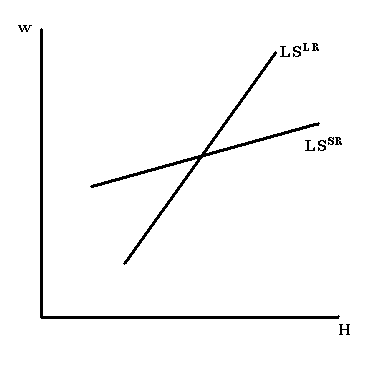
Economists summarize this discussion by talking about an individual's labor supply curve. The supply curve, as you will recall, simply summarizes the amount of a commodity supplied at different prices. In this case, the commodity is your labor, and the "price" of your labor is the wage rate. We also want to talk about two labor supply curves: the long run labor supply curve and the short run labor supply curve. The first scenario is an attempt to understand your long run labor supply curve: how much would the number of hours you are willing to work vary with a permanent change in the wage rate. The second scenario is an effort to understand your short run labor supply curve. How much would the number of hours you are willing to work vary with a temporary change in the wage rate? |
|||||||||||||||||||||||||||||||||||||||||||||||||||||||||||||||||
|
We might draw the long run and short run labor supply curves as illustrated in Figure 1-1. As drawn here, both are upward sloping, but the short run labor supply curve has a less steep curve. As you recall, that means the short run labor supply curve is more elastic. |
|||||||||||||||||||||||||||||||||||||||||||||||||||||||||||||||||
|
This is not a fanciful issue. There are many problems where the difference between the long run and the short run labor supply curves is important. In some cases, a change in the wage rate causes a movement along the long run labor supply curve, while, in other cases, a change in the wage rate causes a movement along the short run labor supply curve. |
|||||||||||||||||||||||||||||||||||||||||||||||||||||||||||||||||
|
Some examples will make the point. In each case, decide whether you want to use the long run or short run supply curve to figure out how many hours the individual wants to work. |
|||||||||||||||||||||||||||||||||||||||||||||||||||||||||||||||||
|
· Fred, currently employed at $10 an hour, loses his job. He starts the process of looking for a new, comparable job, but it will take some time. In the meantime, the best he can find is a job flipping burgers at McDonalds at $6 an hour. |
|||||||||||||||||||||||||||||||||||||||||||||||||||||||||||||||||
|
· Barney is in his second year of college. Right now, the best job he can find is a job at McDonalds at $6 an hour. |
|||||||||||||||||||||||||||||||||||||||||||||||||||||||||||||||||
|
· Barney's twin brother is not going to college. He, too, learns that the best job he can find is at McDonald's at $6 an hour. |
|||||||||||||||||||||||||||||||||||||||||||||||||||||||||||||||||
|
· Betty is majoring in Fashion Design. One of her designs has fascinated an elite designer in New York City. The designer has offered her the chance to come to Manhattan and work at $50 an hour completing the design and helping design a whole line around the design. |
|||||||||||||||||||||||||||||||||||||||||||||||||||||||||||||||||
|
· Wilma is currently making $6 an hour. She is offered $15 an hour to work for the next two days doing the store's annual inventory. Thereafter, she will return to her old job. |
|||||||||||||||||||||||||||||||||||||||||||||||||||||||||||||||||
|
· Wilma is currently making $6 an hour. She is offered $15 an hour to help set up a new store. The task will last two years. Thereafter, she will return to her old job. |
|||||||||||||||||||||||||||||||||||||||||||||||||||||||||||||||||
The Backward Bending Labor Supply Curve |
|||||||||||||||||||||||||||||||||||||||||||||||||||||||||||||||||
|
While economists would agree that the short run labor supply curve is more elastic than the long run supply curve of labor, there is disagreement over the slope of the long run labor supply curve. Many economists believe that the long run labor supply curve is backward bending. That is, as the wage rate rises, people will want to work less on average. In that case, we ought to redraw Figure 1-1 as Figure 1-2, illustrated below. |
|||||||||||||||||||||||||||||||||||||||||||||||||||||||||||||||||
|
|
|||||||||||||||||||||||||||||||||||||||||||||||||||||||||||||||||
It is hard to argue that the labor supply curve does not eventually bend backward. The typical male college graduate will work for about 40 years, for an average of about 1,600 hours a year or 64,000 hours over his lifetime. Suppose he could earn $10,000,000 an hour. Lifetime earnings would be $640 billion making no allowance for discounting. Common sense suggests that most people, given that opportunity would choose to work fewer hours and spend more time enjoying their wealth. |
|||||||||||||||||||||||||||||||||||||||||||||||||||||||||||||||||
|
Notice that, as drawn, the labor supply curve initially slopes upward. It begins to slope backward only after wages have reached a critical level. We might ask just where that level occurs. |
|||||||||||||||||||||||||||||||||||||||||||||||||||||||||||||||||
|
This raises an important point in our study of Macroeconomics. Economic theory is ultimately an empirical science. The question of where the labor supply curve begins to bend backward cannot be answered by simply sitting around and thinking about it. We must turn to the data for an answer. |
|||||||||||||||||||||||||||||||||||||||||||||||||||||||||||||||||
Data on the Backward Bending Labor Supply Curve |
|||||||||||||||||||||||||||||||||||||||||||||||||||||||||||||||||
|
Table 1-1 presents data on GDP and hours worked in the United States since 1870. We will spend time later looking more carefully at some of these data. Gross Domestic Product is the value of all final goods and services produced in the United States in a year. Restating GDP in 1985 dollars is a simple way of adjusting for inflation (prices). Things cost a lot less in 1870. Per capita GDP is simply GDP divided by the number of people. Hours worked is of course an average. Some people worked more; some people worked less. |
|||||||||||||||||||||||||||||||||||||||||||||||||||||||||||||||||
|
|
|||||||||||||||||||||||||||||||||||||||||||||||||||||||||||||||||
|
|||||||||||||||||||||||||||||||||||||||||||||||||||||||||||||||||
|
From these data, it looks like people have been reducing their hours of work. Over this period, we have clearly been moving along the long run supply curve. There seems no other interpretation but that we are along the backward bending portion of the labor supply curve. |
|||||||||||||||||||||||||||||||||||||||||||||||||||||||||||||||||
From Individual Supply to Aggregate Supply |
|||||||||||||||||||||||||||||||||||||||||||||||||||||||||||||||||
|
In macroeconomics, we typically work with aggregate data, here aggregate labor supply. The graph in Figure 1-3 shows how to get from individual supply curves to aggregate supply curves. Suppose we have two labor supply curves, S1 and S2. The total labor supply curve is simply the horizontal sum. If there many individuals, then there are many supply curves to sum, but the principle is still the same. |
|||||||||||||||||||||||||||||||||||||||||||||||||||||||||||||||||
|
|
|||||||||||||||||||||||||||||||||||||||||||||||||||||||||||||||||
This analysis assumes that all workers have identical skills or at least, that any differences they might have really do not matter that much. This assumption, which we call the aggregation assumption, is an important one. We will want to come back to it later in this lecture as well as later in the course. |
|||||||||||||||||||||||||||||||||||||||||||||||||||||||||||||||||
Aggregate Labor Demand and Supply |
|||||||||||||||||||||||||||||||||||||||||||||||||||||||||||||||||
|
When we go through the same process to get an aggregate labor demand curve, we will get the traditional downward sloping demand curve. Figure 1-4 shows the result. It shows the long run and short run aggregate supply curves as well as the long run aggregate demand curve. |
|||||||||||||||||||||||||||||||||||||||||||||||||||||||||||||||||
|
|
|||||||||||||||||||||||||||||||||||||||||||||||||||||||||||||||||
There is also a short-run aggregate demand curve. To keep our story simple, we ignore it. |
|||||||||||||||||||||||||||||||||||||||||||||||||||||||||||||||||
The Basics of Labor Supply and Demand |
|||||||||||||||||||||||||||||||||||||||||||||||||||||||||||||||||
|
The same concepts of supply and demand that you learned in microeconomics reappear in macroeconomics. While a complete review of the concepts of supply and demand is not in order, some of the basic concepts are certainly worth revisiting. The emphasis here is on the concepts of supply and demand used in this course. |
|||||||||||||||||||||||||||||||||||||||||||||||||||||||||||||||||
Supply |
|||||||||||||||||||||||||||||||||||||||||||||||||||||||||||||||||
|
The basic concept of the supply curve is quite simple. It gives the quantity supplied as a function of price. Here, the "price" of labor is the wage rate. Some examples will illustrate the general ideas. |
|||||||||||||||||||||||||||||||||||||||||||||||||||||||||||||||||
|
Fred works 20 hours a week at $10 an hour. He gets a raise to $20 an hour, and is now willing to work 30 hours a week. |
|||||||||||||||||||||||||||||||||||||||||||||||||||||||||||||||||
|
· True or false: Fred labor supply has increased. |
|||||||||||||||||||||||||||||||||||||||||||||||||||||||||||||||||
|
· If you said false, you are correct. This is a movement along Fred's labor supply curve, not an increase in his labor supply. The quantity of labor Fred is supplying has increased. |
|||||||||||||||||||||||||||||||||||||||||||||||||||||||||||||||||
|
Fred works 20 hours a week at $10 an hour. He has found a second hand car he wants to buy, and is now willing to work 30 hours a week. |
|||||||||||||||||||||||||||||||||||||||||||||||||||||||||||||||||
|
· True or false: Fred's labor supply has increased. |
|||||||||||||||||||||||||||||||||||||||||||||||||||||||||||||||||
|
· If you said true, you are correct. This is a movement of Fred's labor supply curve. |
|||||||||||||||||||||||||||||||||||||||||||||||||||||||||||||||||
|
Fred works 20 hours a week at $10 an hour. His boss has a rush project and offers Fred $15 an hour if he is willing to work 45 hours a week until the project is completed. Fred accepts |
|||||||||||||||||||||||||||||||||||||||||||||||||||||||||||||||||
|
· True or false: Fred moves along his short run labor supply curve. |
|||||||||||||||||||||||||||||||||||||||||||||||||||||||||||||||||
|
· If you said true, you are correct. |
|||||||||||||||||||||||||||||||||||||||||||||||||||||||||||||||||
Demand |
|||||||||||||||||||||||||||||||||||||||||||||||||||||||||||||||||
|
The same ideas apply to the demand curve. It gives the quantity demanded as a function of price. As in the previous example, the "price" is the wage rate. Again, some examples will illustrate the concept. |
|||||||||||||||||||||||||||||||||||||||||||||||||||||||||||||||||
|
Fred works 20 hours a week at $10 an hour. A new union contract boosts the wage rate to $15 an hour and Fred's boss says that he only wants him for 15 hours a week. |
|||||||||||||||||||||||||||||||||||||||||||||||||||||||||||||||||
|
· True or false: The demand for Fred's labor has decreased. |
|||||||||||||||||||||||||||||||||||||||||||||||||||||||||||||||||
|
· If you said false, you are correct. This is a movement along the labor demand curve, not a decrease in demand. The quantity of labor demanded will decrease. |
|||||||||||||||||||||||||||||||||||||||||||||||||||||||||||||||||
|
Fred works 20 hours a week at $10 an hour. A new machine comes on the market, which cuts the time required to do Fred's job in half. Fred's boss tells him that he now wants to hire him for only 10 hours a week. |
|||||||||||||||||||||||||||||||||||||||||||||||||||||||||||||||||
|
· True or false: Fred's labor demand has decreased. |
|||||||||||||||||||||||||||||||||||||||||||||||||||||||||||||||||
|
· If you said true, you are correct. Machines are a substitute to Fred's labor. The decrease in the price of the substitute causes a reduction in the demand for labor, and the labor demand curve shifts to the left. |
|||||||||||||||||||||||||||||||||||||||||||||||||||||||||||||||||
|
Fred works 20 hours a week at $10 an hour. The price of the raw materials Fred uses in his job skyrockets. Fred's boss tells him that he now wants to hire him for only 10 hours. |
|||||||||||||||||||||||||||||||||||||||||||||||||||||||||||||||||
|
· True or false: Fred's labor demand has decreased. |
|||||||||||||||||||||||||||||||||||||||||||||||||||||||||||||||||
|
· If you said true, you are correct. Raw materials are a complement to Fred's labor. The increase in the price of the complement causes a reduction in the demand for labor, and the labor demand curve shifts to the left. |
|||||||||||||||||||||||||||||||||||||||||||||||||||||||||||||||||
Some Examples |
|||||||||||||||||||||||||||||||||||||||||||||||||||||||||||||||||
|
Let us trace out some economic events and see what happens in term of our labor supply and demand model. |
|||||||||||||||||||||||||||||||||||||||||||||||||||||||||||||||||
|
· A war increases the demand for military products. Labor demand increases. |
|||||||||||||||||||||||||||||||||||||||||||||||||||||||||||||||||
|
· The US dollar drops sharply in world markets, increasing the price of imports. Labor demand increases. |
|||||||||||||||||||||||||||||||||||||||||||||||||||||||||||||||||
|
· New technological innovations make American Workers more productive. Labor demand increases. |
|||||||||||||||||||||||||||||||||||||||||||||||||||||||||||||||||
|
|
|||||||||||||||||||||||||||||||||||||||||||||||||||||||||||||||||
|
The important thing to remember is that a change in price causes an increase/decrease in quantity demanded or supplied, which is movement along the demand or supply curve. Anything but a change in price will cause a change in demand or supply and a shift of the demand or supply curve. |
|||||||||||||||||||||||||||||||||||||||||||||||||||||||||||||||||
Some other Concepts |
|||||||||||||||||||||||||||||||||||||||||||||||||||||||||||||||||
|
This application of supply and demand illustrates the model of aggregate demand and aggregate supply that we will be using later in this course. It also illustrates the type of economic reasoning we will be applying in this course. There are some other points we want to make at the beginning. |
|||||||||||||||||||||||||||||||||||||||||||||||||||||||||||||||||
The difference between Macroeconomics and Microeconomics |
|||||||||||||||||||||||||||||||||||||||||||||||||||||||||||||||||
|
This is not a trick question, nor is it the lead-in to a David Letterman routine. The line between macroeconomics and microeconomics is less sharp than it used to be, but it is still there. Many universities used to teach the macroeconomics course before the microeconomics course. The argument used to be “get them interested in the subject before boring them with microeconomics.” We have learned over time that a foundation in microeconomics is required to understand macroeconomics fully. |
|||||||||||||||||||||||||||||||||||||||||||||||||||||||||||||||||
|
What makes this course different is that we focus on the economy as a whole. |
|||||||||||||||||||||||||||||||||||||||||||||||||||||||||||||||||
|
· Instead of talking about the demand and supply of (say) pizza, we talk about the demand and supply of output. |
|||||||||||||||||||||||||||||||||||||||||||||||||||||||||||||||||
|
· Instead of talking about what determines the price of pizza, we talk about what determines the overall level of prices in the economy. |
|||||||||||||||||||||||||||||||||||||||||||||||||||||||||||||||||
|
· Instead of talking about what determines the demand for workers in the pizza industry, we talk about what determines the total demand for workers. |
|||||||||||||||||||||||||||||||||||||||||||||||||||||||||||||||||
Positive versus Normative Economics |
|||||||||||||||||||||||||||||||||||||||||||||||||||||||||||||||||
|
This course covers much more controversial material than does the Microeconomics course, and it is important to stress the difference between Positive and Normative Economics. Positive Economics talks about what will happen while normative economics talks about what should happen. Thus |
|||||||||||||||||||||||||||||||||||||||||||||||||||||||||||||||||
|
· If the government cuts spending by $10 billion, then many people will be unemployed. |
|||||||||||||||||||||||||||||||||||||||||||||||||||||||||||||||||
|
· If the government cuts spending by $10 billion, then no one will be unemployed. |
|||||||||||||||||||||||||||||||||||||||||||||||||||||||||||||||||
|
|
|||||||||||||||||||||||||||||||||||||||||||||||||||||||||||||||||
|
These are both positive statements (though) only one can be true. However |
|||||||||||||||||||||||||||||||||||||||||||||||||||||||||||||||||
|
· The government should cut spending by $10 billion |
|||||||||||||||||||||||||||||||||||||||||||||||||||||||||||||||||
|
· The government should not cut spending. |
|||||||||||||||||||||||||||||||||||||||||||||||||||||||||||||||||
|
|
|||||||||||||||||||||||||||||||||||||||||||||||||||||||||||||||||
|
These are both normative statements (though at most only one can be true). This is a course in positive economics. We try to talk about what is true and what is not true, without getting into policy issues. We need to be careful however, for debates over many normative issues turn on what we believe the truth to be about positive issues. |
|||||||||||||||||||||||||||||||||||||||||||||||||||||||||||||||||
|
Macroeconomic issues frequently generate policy debates, and distinguished economists will be on both sides of the issue. These debates tend to give economists a bad name. Thus, you get cracks such as "if you laid all the economists end to end, you would still not get a conclusion". Harry Truman once requested a one handed economist (who presumably would stop saying "on the one hand this, but on the other hand that".) Yet, surprisingly, there are areas in macroeconomics where there is broad agreement as to how the economy works. There are other areas where there is limited agreement. I will try to point out those areas as we get to them. |
|||||||||||||||||||||||||||||||||||||||||||||||||||||||||||||||||
|
At some points in the lecture notes, you will see something like the following warning modeled after the famous Surgeon General warnings on cigarettes: |
|||||||||||||||||||||||||||||||||||||||||||||||||||||||||||||||||
Warning required by the Economist-General: |
|||||||||||||||||||||||||||||||||||||||||||||||||||||||||||||||||
|
· Many economists would disagree with what I am saying here. They would say the following: |
|||||||||||||||||||||||||||||||||||||||||||||||||||||||||||||||||
|
There is no Economist-General, thankfully, but it is important to note when there is agreement and disagreement amongst economists. |
|||||||||||||||||||||||||||||||||||||||||||||||||||||||||||||||||
The Use of Models |
|||||||||||||||||||||||||||||||||||||||||||||||||||||||||||||||||
|
Our graphs of labor supply and labor demand are, in truth, economic models. Economists make great use of models, as do we all. Every time you use a road map, you are using a model, for a road map is nothing but a graphical representation of the road system. We will make heavy use of models. |
|||||||||||||||||||||||||||||||||||||||||||||||||||||||||||||||||
Why use models? |
|||||||||||||||||||||||||||||||||||||||||||||||||||||||||||||||||
|
We use models for three purposes: |
|||||||||||||||||||||||||||||||||||||||||||||||||||||||||||||||||
Models simplify an issue to help in our
understanding
|
|||||||||||||||||||||||||||||||||||||||||||||||||||||||||||||||||
|
There are routes you follow every day that you know by heart. If you wanted to figure out how to go to a strange location in a strange city, a road map would be invaluable. The road map is not totally accurate. It does not show every turn in the road, nor does it list every road along the way. That detail would be overwhelming. For example if you wanted to go from here to San Francisco Airport all you would want would be a simple map showing roads to the Ohio Turnpike, a rough map of Interstate 80, and a map of the main roads in San Francisco. Details about the streets in Cheyenne Wyoming would not be helpful and would probably be confusing. When we developed the aggregate labor supply curve, we assumed that all workers are identical. That assumption is an application of this principle. |
|||||||||||||||||||||||||||||||||||||||||||||||||||||||||||||||||
Models help us to
predict
|
|||||||||||||||||||||||||||||||||||||||||||||||||||||||||||||||||
|
If you want to predict how long it will take you to drive to San Francisco, the road map will be quite helpful. It will not be perfect, but you can get a good idea about the distance from the map, though you will miss some details. (For example, some ramps on I-80 in Salt Lake City might be closed one year.) |
|||||||||||||||||||||||||||||||||||||||||||||||||||||||||||||||||
|
The simple supply and demand model makes it easy for us to predict how prices and quantities will change. For example, Coke is a substitute for Pepsi. Thus, we can predict how a rise in the price of Pepsi will influence the demand for Coke. |
|||||||||||||||||||||||||||||||||||||||||||||||||||||||||||||||||
Models help us to
interpret data
|
|||||||||||||||||||||||||||||||||||||||||||||||||||||||||||||||||
|
We simply need models to tell us what data matter. The model focuses our attention on collecting the right data and gives us a way of explaining what the data mean. Again, you do not want to know every road sign between here and San Francisco. Once you know the route, you can then interpret the signs as you come across them and see which ones you really want to know. |
|||||||||||||||||||||||||||||||||||||||||||||||||||||||||||||||||
How do we tell a good model from a bad model? |
|||||||||||||||||||||||||||||||||||||||||||||||||||||||||||||||||
|
Economists talk about models in terms of “do they fit the facts?” Alas, when it comes to economics, no model fits the facts perfectly, and we can only talk about the best model we have in terms of the one that best fits the facts. |
|||||||||||||||||||||||||||||||||||||||||||||||||||||||||||||||||
|
We should be careful about applying the test too rigorously, for no law or model in economics or physics works perfectly. We often find it useful to use models known to be inconsistent with the facts. The hypothetical road map we have been discussing will almost certainly assume that the earth is flat. How totally silly and, at the same time, how utterly reasonable. |
|||||||||||||||||||||||||||||||||||||||||||||||||||||||||||||||||
Good Economic models assume rational Behavior |
|||||||||||||||||||||||||||||||||||||||||||||||||||||||||||||||||
|
All decisions in an economy are, or course, ultimately made by human beings. It is tempting to model decisions by saying that “people are stupid” or that “that is just the way it is” or that "people make totally myopic decisions". Economists take a different approach. We assume that economic behavior is rational, and we seek to explain not just what people do, but why they do it. Thus, when we explain economic behavior, we always want to know why it is rational. |
|||||||||||||||||||||||||||||||||||||||||||||||||||||||||||||||||
|
In the case of our long run and short run labor supply curves, we went to great lengths to discuss when the behavior makes sense. We understood a lot about those curves by simply assuming that an individual would behave rationally. |
|||||||||||||||||||||||||||||||||||||||||||||||||||||||||||||||||
Good Economic models incorporate Lincoln’s Law |
|||||||||||||||||||||||||||||||||||||||||||||||||||||||||||||||||
|
When we make rational decisions, we must base those decisions about what we expect the future to bring. If our decisions are to be rational, our expectations about the future must also be rational. You will see repeatedly in this course that what people expect matters. Certainly, that is true when we discussed the labor demand and supply model and the example of a $1000 an hour job. |
|||||||||||||||||||||||||||||||||||||||||||||||||||||||||||||||||
|
Suppose your broker urges you to buy a particular stock because it will go up 25 percent next year. After all, it went up by 25 percent last year. You should wonder how the broker could be sure. Moreover, if the broker really believes this, is he or she investing everything in a sure thing? |
|||||||||||||||||||||||||||||||||||||||||||||||||||||||||||||||||
|
One simple way of putting this proposition is in terms of Lincoln's Law. Lincoln stated that basic adage |
|||||||||||||||||||||||||||||||||||||||||||||||||||||||||||||||||
"You can fool some of the people all of the time and all of the people some of the time, but you cannot fool all of the people all of the time". |
|||||||||||||||||||||||||||||||||||||||||||||||||||||||||||||||||
|
Lincoln's law is a good way of summarizing the emphasis we place on people not being fooled. |
|||||||||||||||||||||||||||||||||||||||||||||||||||||||||||||||||
|
|
|||||||||||||||||||||||||||||||||||||||||||||||||||||||||||||||||
The Role of Statistics |
|||||||||||||||||||||||||||||||||||||||||||||||||||||||||||||||||
|
There is a famous quote from Benjamin Disraeli, a 19th Century Prime Minister of Great Britain about “lies, damn lies, and statistics”. Disraeli hated statistics. Economists love statistics. If you want to major in Economics, you will have to take a course in Econometrics, the statistical analysis of economic data. Most economics majors do not like it, but it is an important course. If you like it, you should probably go to graduate school in economics. |
|||||||||||||||||||||||||||||||||||||||||||||||||||||||||||||||||
|
Disraeli did hit on an important point. While statistics are important, it is possible to misuse them. You will see many statistics in this course. In fact, you have already seen one set of statistics. While you will not see any heavy statistical analysis, It is important to know about some issues that come up in the use and abuse of statistics. |
|||||||||||||||||||||||||||||||||||||||||||||||||||||||||||||||||
Statistical Analysis |
|||||||||||||||||||||||||||||||||||||||||||||||||||||||||||||||||
|
It is important to get statistical analysis right. As an example of this, consider the problem posed by the old game show, "Lets' Make a Deal". The host, Monty Hall, would offer a contestant the choice of opening one of three doors, say Door A, Door B, and Door C. A valuable prize lay behind one of the doors, while essentially worthless prizes lay behind the other two. Once the contestant had made a choice, Hall would then open one of the doors not selected. The choice was not at random, for Hall knew where the prize was and always selected a door concealing a gag prize. Hall would then offer the contestant the choice of changing his or her selection. |
|||||||||||||||||||||||||||||||||||||||||||||||||||||||||||||||||
|
At this point, the audience – doubtless prompted by Hall's assistants – went wild. Some urged the contestant to stick with the original choice; others urged a change. The befuddled contestant was thus subject to Hall's humor. |
|||||||||||||||||||||||||||||||||||||||||||||||||||||||||||||||||
|
Many people would argue that it made no difference whether the contestant changed or not. After all, all three doors were equally likely. Why should they change? |
|||||||||||||||||||||||||||||||||||||||||||||||||||||||||||||||||
|
This reasoning is incorrect, though the explanation is somewhat subtle. Statisticians point out that under these conditions, the contestant should always change. Suppose, for instance, the contestant had chosen door "A". There was a 1/3 probability that door "A" was right and a 2/3 chance that this was the wrong choice. The difficulty was in making the choice between "B" and "C" if you wanted to change. |
|||||||||||||||||||||||||||||||||||||||||||||||||||||||||||||||||
|
Hall made that easy. He showed you which of the two remaining doors not to choose. Thus, if a contestant stuck with his original choice, he had only a one third chance of being right; if he changed, he had a two-thirds chance of being right. |
|||||||||||||||||||||||||||||||||||||||||||||||||||||||||||||||||
Misleading Comparisons |
|||||||||||||||||||||||||||||||||||||||||||||||||||||||||||||||||
|
Economists must constantly deal with misleading comparisons. For example, following the Second World War, many people compared the American standard of living with that of other countries. These comparisons were misleading, for they compared a country barely affected by a war with countries badly damaged by the Second World War II. Now you see comparisons based on how fast countries are growing with the obvious tag line of “why can’t we grow that fast”. Both comparisons are misleading. |
|||||||||||||||||||||||||||||||||||||||||||||||||||||||||||||||||
|
Stockman mentions one famous misleading comparison. Every year or so we see a new movie touted as the highest grossing movie of all time. These comparisons do not take into account the role of inflation. A dollar today is not the same as a dollar in 1939. If we adjust for inflation, Gone with the Wind earned over $500 million in 1996 prices. (And, if we adjust for purchasing power, the figure is even higher, perhaps $5 billion. No modern movie, even Titanic, has ever come close to that figure.) |
|||||||||||||||||||||||||||||||||||||||||||||||||||||||||||||||||
|
Another comparison may make the point. Bill Gates is a very wealthy man. Every time Microsoft's stock price moves by a sixteenth of a point, Gates makes or loses more money that I expect to see in my lifetime. Having said that, a good ballpark estimate of Gates' wealth is $90 billion. John D. Rockefeller was also a wealthy man. At the peak of his wealth, Rockefeller was worth about $1 billion. Who was wealthier? |
|||||||||||||||||||||||||||||||||||||||||||||||||||||||||||||||||
|
This is not a simple comparison. When Rockefeller was worth $1 billion, prices were about one fourteenth as high as they are now. Hence, the inflation-adjusted comparison would be $90 billion versus $14 billion. |
|||||||||||||||||||||||||||||||||||||||||||||||||||||||||||||||||
|
Even that comparison may not be appropriate. Most people want to know about the relative influence given the size of the economy. At the peak, Rockefeller's wealth was probably about 3% of GDP. Since GDP today is about $9 trillion, the right comparison might be $270 billion versus $90 billion. |
|||||||||||||||||||||||||||||||||||||||||||||||||||||||||||||||||
Selection Bias |
|||||||||||||||||||||||||||||||||||||||||||||||||||||||||||||||||
|
Many of these misleading comparisons arise from selection bias. We often do studies where we analyze the behavior of a group, and then extrapolate the results. If we incorrectly select our group, our comparisons will be wrong. One of the most famous examples of this is the 1936 Literary Digest poll predicting that Alf Landon would beat Franklin Roosevelt for president. Unfortunately, Literary Digest selected voters using telephone directories. At that time, few homes had a telephone. Well-to-do families were much more likely to have telephones than low-income families. Then, as now, high-income families are more likely to vote Republican than low-income families. In short, the Literary Digest had a biased selection of the population, with catastrophic results for the accuracy of their poll. |
|||||||||||||||||||||||||||||||||||||||||||||||||||||||||||||||||
|
As a second example, consider a company trying to determine the demand for prune juice and skateboards. The company goes to a retirement community in Florida and tries to determine the overall demand for skateboards. The results show that there would be little demand for skateboards. At the same time the company goes to a university campus and tries to determine the overall demand for prune juice. They conclude that there would be little demand for prune juice. Both of these incorrect results are a clear result of selection bias. |
|||||||||||||||||||||||||||||||||||||||||||||||||||||||||||||||||
Correlation |
|||||||||||||||||||||||||||||||||||||||||||||||||||||||||||||||||
|
When analyzing data, it is important to look at how two series, say X and Y, are correlated. We say that X and Y are positively correlated if they tend to increase and decrease together. We say that X and Y are negatively correlated if one tends to increase while the other decreases. We say that X and Y are uncorrelated if increases or decreases in X are unrelated to increases in Y. |
|||||||||||||||||||||||||||||||||||||||||||||||||||||||||||||||||
|
Nevertheless, there is a big step between correlation and causation. For example, married men live longer than unmarried men do. That is there is a positive correlation between being married and one’s life expectancy. Why do we see this correlation? Is it because married men are motivated to take care of themselves? Is it because marriage is a good thing? Is it because women will not marry life’s real losers? In short, correlation is not enough. |
|||||||||||||||||||||||||||||||||||||||||||||||||||||||||||||||||
|
Thus leads us back to the role of models. Statistics tell us whether the models fit the fact, and models help us to understand when statistics are meaningful and when they are misleading. |
|||||||||||||||||||||||||||||||||||||||||||||||||||||||||||||||||
The Basic Malthusian Model |
|||||||||||||||||||||||||||||||||||||||||||||||||||||||||||||||||
|
We can illustrate these points by taking a simple economic model through its paces, the basic Malthusian Model. It is a simple - indeed simplistic - model, but its use is a guide to how economists use – and misuse – economic models. The basic ideas of the Malthusian model are commonly used in many popular discussions today. |
|||||||||||||||||||||||||||||||||||||||||||||||||||||||||||||||||
The key assumptions of the model |
|||||||||||||||||||||||||||||||||||||||||||||||||||||||||||||||||
|
· Every person must consume some minimum amount of food to survive. |
|||||||||||||||||||||||||||||||||||||||||||||||||||||||||||||||||
|
· Resources, if they grow at all, tend to grow at an arithmetic rate. |
|||||||||||||||||||||||||||||||||||||||||||||||||||||||||||||||||
|
· Population, if unchecked by famine or a similarly calamity, grows at a geometric rate. |
|||||||||||||||||||||||||||||||||||||||||||||||||||||||||||||||||
|
· A production function, relating output to total labor supply. Our production function has a positive but diminishing marginal physical product. (I.e., as the number of workers grows, so does total output, but the increase in output associated with each new worker is constantly falling since other resources are either fixed or growing more slowly). |
|||||||||||||||||||||||||||||||||||||||||||||||||||||||||||||||||
The key prediction |
|||||||||||||||||||||||||||||||||||||||||||||||||||||||||||||||||
|
· Unless population growth is checked, our standard of living is doomed. In time, we will be driven to a subsistence level of existence. |
|||||||||||||||||||||||||||||||||||||||||||||||||||||||||||||||||
|
Figure 1-5 shows the basic properties of the Malthusian model. Output is a function of the total labor supply, and, as labor supply increases, so does output, but at a decreasing rate. The subsistence line is a straight line with slope s. Doubling the number of workers doubles the amount of food required. The population will settle in at No, with workers living at the subsistence level. |
|||||||||||||||||||||||||||||||||||||||||||||||||||||||||||||||||
|
|
|||||||||||||||||||||||||||||||||||||||||||||||||||||||||||||||||
|
|||||||||||||||||||||||||||||||||||||||||||||||||||||||||||||||||
A Discussion of the Model |
|||||||||||||||||||||||||||||||||||||||||||||||||||||||||||||||||
|
The prediction is inevitable even without knowing the values of n and s. The only property about the production function we have used is that of diminishing returns to proportion and that seems harmless enough. Figure 1-5 shows the consequences. |
|||||||||||||||||||||||||||||||||||||||||||||||||||||||||||||||||
|
|
|||||||||||||||||||||||||||||||||||||||||||||||||||||||||||||||||
It shows how abject poverty can exist along great wealth. Without getting into the details, we will suppose that workers only get part of the output. Figure 1-6 shows this result. The rest goes to the landlords or some other group. Population is now N1, with the workers living at the subsistence level. The landowners can live quite well, but all movements to ameliorate the plight of the poor - other than population control - are doomed to failure. |
|||||||||||||||||||||||||||||||||||||||||||||||||||||||||||||||||
|
For example, if we were to eliminate the landowners right to part of the output, there would be a temporary increase in the standard of living for workers. That would cause population to grow, and the increase in the standard of living would end when the population had grown to No. |
|||||||||||||||||||||||||||||||||||||||||||||||||||||||||||||||||
|
A Malthusian would also oppose the following as giving only short-term gain to the poor: |
|||||||||||||||||||||||||||||||||||||||||||||||||||||||||||||||||
|
· Medical care for the poor |
|||||||||||||||||||||||||||||||||||||||||||||||||||||||||||||||||
|
· Ending Primogeniture (A quaint British custom, now gone, of requiring that most property be left to the eldest son.) |
|||||||||||||||||||||||||||||||||||||||||||||||||||||||||||||||||
|
· Ending the Corn Laws (The British call Corn what we call Wheat; at Malthus’s time there were substantial import duties on Corn, or Wheat.) |
|||||||||||||||||||||||||||||||||||||||||||||||||||||||||||||||||
Summary |
|||||||||||||||||||||||||||||||||||||||||||||||||||||||||||||||||
|
The best economic models are quite powerful and feature prominently in public debates. They are powerful because they work to general conclusions from simple assumptions. As we can see this is a good model, for it is very simple and very powerful. It had enormous influence in British political debate in the early 19th century. In its more modern versions, we still see it in use today. |
|||||||||||||||||||||||||||||||||||||||||||||||||||||||||||||||||
|
Alas, the model does not work. The past two centuries have seen both enormous population growth and enormous growth in real incomes, clearly inconsistent with Malthus. We have a better model, one that one that emphasizes the role of capital accumulation and technological change. In fact, it is technological change that makes the fixed supply of some resources irrelevant. |
|||||||||||||||||||||||||||||||||||||||||||||||||||||||||||||||||
|
For example, consider what might happen as the world begins to run out of oil. We would no longer have our primary fuel source. Would this lead to the Malthusian result? There will be strong incentives to come up with an alternative fuel source. In fact, we have several ready to go and the only reason you do not have an electric car is that the price of oil is still relatively inexpensive. When oil becomes scarcer, the incentive to develop newer technologies and improve existing ones will increase. Thus, economists tend to dismiss concerns about resources being in fixed supply. |
|||||||||||||||||||||||||||||||||||||||||||||||||||||||||||||||||
Relation to the Text |
|||||||||||||||||||||||||||||||||||||||||||||||||||||||||||||||||
|
Each lecture ends with a section relating it to the text. In some cases, material is omitted, either because the text covers it well enough or because it is not worth learning. In other cases, material is added. Each of these “lectures” will end with a brief note relating the lecture to the text, describing what material is left to the student to learn alone and what material may safely be skipped. |
|||||||||||||||||||||||||||||||||||||||||||||||||||||||||||||||||
Which Chapters does this lecture cover? |
|||||||||||||||||||||||||||||||||||||||||||||||||||||||||||||||||
|
|
|||||||||||||||||||||||||||||||||||||||||||||||||||||||||||||||||
What material is new? |
|||||||||||||||||||||||||||||||||||||||||||||||||||||||||||||||||
|
We cover short-run labor supply and demand. We will make use of this later. |
|||||||||||||||||||||||||||||||||||||||||||||||||||||||||||||||||
|
©2000 by
Greg Chase and Charles W. Upton. If
you enrolled in Principles of Macroeconomics at Kent State University, you
may print out one copy for use in class.
All other rights are reserved. |
|||||||||||||||||||||||||||||||||||||||||||||||||||||||||||||||||