Lecture 13: Policy I – Controlling Business Cycles with Monetary and Fiscal Policy |
|||||||||||||||||||||||||||||
|
So far, we have said little about how government decisions influence our economy. We are now going to remedy that deficiency by considering a couple of hypothetical economies, facing hypothetical problems. Since these countries are similar to the United States, it is not surprising that they face similar problems: how do you deal with problems of inflation, unemployment, and tax and spending policies. By considering these problems in the context of these hypothetical economies, we will be able to take each issue up separately. This gives us a luxury not faced in a real economy, where the government must often deal simultaneously with many problems. |
|||||||||||||||||||||||||||||
|
This lecture and the next will focus on short-term policies; a subsequent lecture turns to longer-term issues. |
|||||||||||||||||||||||||||||
The Basic Model |
|||||||||||||||||||||||||||||
|
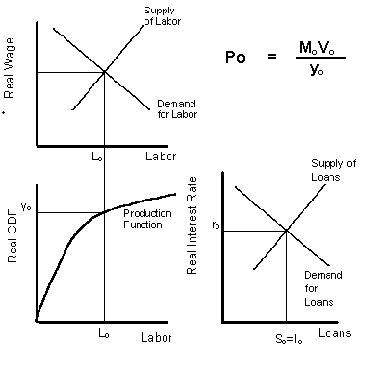
We begin by quickly reviewing our basic model, depicted in Figure 13-1. As you will recall there are four basic parts of the model: |
|||||||||||||||||||||||||||||
|
· The labor market, with the demand and supply of labor; |
|||||||||||||||||||||||||||||
|
· The production function, determining the output; |
|||||||||||||||||||||||||||||
|
· Money market where the Equation of Exchange gives us the price level; and |
|||||||||||||||||||||||||||||
|
· The capital market, equating the demand and supply of loans. |
|||||||||||||||||||||||||||||
|
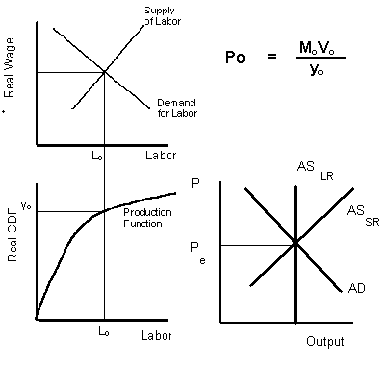
Because the demand and supply of loans are equal if and only if aggregate supply and demand are equal, we can also rewrite our basic model as shown in Figure 13-2. |
|||||||||||||||||||||||||||||
The Lake Pleasant Meetings |
|||||||||||||||||||||||||||||
|
Once a year, the famous Lake Pleasant Resort is host to economists from all over the world. Representatives from a variety of countries discuss their particular economic problems and get advice from the audience, of eminent economists from around the world. This year, representatives from Upper, Middle, and Lower Bedrock are making the presentations. At one time, the three countries were actually one, but split for reasons we need not go into. Because of their common history, the countries are quite similar and indeed similar to the United States. |
|||||||||||||||||||||||||||||
|
The Economist General also attends and manages to make a number of comments during the discussion. |
|||||||||||||||||||||||||||||
|
|
|||||||||||||||||||||||||||||
|
|||||||||||||||||||||||||||||
Upper Bedrock |
|||||||||||||||||||||||||||||
|
Upper Bedrock's real Gross Domestic Product (GDP) has been growing at about 3 percent a year for some time. Unemployment equals the natural rate. Alas, the money supply has been growing at 15% a year. As the quantity theory predicts, the inflation rate is: |
|||||||||||||||||||||||||||||
%Growth in Prices »
|
|||||||||||||||||||||||||||||
|
The government wants to bring the inflation rate down, essentially to zero, but it wants to keep the unemployment rate at the natural rate. Economists from the Central Bank and the Ministry of Finance have assembled to discuss their options. |
|||||||||||||||||||||||||||||
|
American economists recognize the Central Bank of Upper Bedrock as roughly corresponding to the United States Federal Reserve System. The United States splits the responsibilities of the Finance Ministry among the United States Department of the Treasury, the Office of Management and Budget and the Council of Economic Advisors. |
|||||||||||||||||||||||||||||
Why Worry |
|||||||||||||||||||||||||||||
|
At this point, someone in the audience wondered why Upper Bedrock should worry about inflation. He recalled Fisher's Law, which states that |
|||||||||||||||||||||||||||||
|
rN
@ reR + pe |
|||||||||||||||||||||||||||||
|
where |
|||||||||||||||||||||||||||||
|
·
rN = The Nominal Interest Rate |
|||||||||||||||||||||||||||||
|
·
reR = Expected Real Rate |
|||||||||||||||||||||||||||||
|
· pe = The expected inflation rate |
|||||||||||||||||||||||||||||
|
Thanks to its workings, people are unaffected by expected inflation. When inflation was unexpected, a gainer matched each loser. Given that, why go to the trouble of eliminating inflation, particularly when the data from other countries indicated that stopping inflation could be a painful task? |
|||||||||||||||||||||||||||||
|
The Economist General himself answered this fundamental question. Recall the basic equation: |
|||||||||||||||||||||||||||||
%Growth in Prices »
|
|||||||||||||||||||||||||||||
|
A more precise restatement would be |
|||||||||||||||||||||||||||||
%Growth in Prices =
|
|||||||||||||||||||||||||||||
|
The last term represents the uncertainty of inflation, which tends to grow with the inflation rate. As we know from models incorporating imperfect information the more imperfect the information, the harder it is to make correct decisions. Thus the greater the rate of inflation, the greater is the uncertainty in the economy. By eliminating inflation, we eliminate a source of uncertainty. That is our real objective. (The Economist General noted some qualifications we need not go into here.) |
|||||||||||||||||||||||||||||
The Dilemma |
|||||||||||||||||||||||||||||
|
The mechanics of ending inflation is not such a big deal. Every beginning economics student knows the basic equation for inflation: |
|||||||||||||||||||||||||||||
%Growth in Prices »
|
|||||||||||||||||||||||||||||
|
and everybody knows that Upper Bedrock had gotten in this predicament by allowing the money supply to grow at 15% per year. To get an inflation rate of zero, all the Central Bank of Upper Bedrock need do is to cut the rate of growth of the money supply from 15 percent a year to three percent a year. |
|||||||||||||||||||||||||||||
|
|
|||||||||||||||||||||||||||||
|
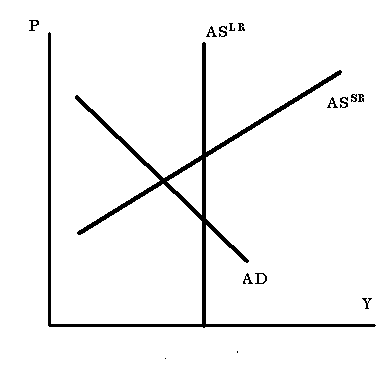
The aggregate supply and demand curves drawn in Figure 13-3 show the dilemma. The inflation rate has been 12 percent a year for so long that people are clearly expecting a 12 percent inflation rate next year. The aggregate demand curve and the short run aggregate supply curve will intersect the long run aggregate supply curve where the price level is 112 (or 112 percent of this year's price level.). If the Central Bank only allows the money supply to grow by three percent, the aggregate demand curve will shift down by 12%. |
|||||||||||||||||||||||||||||
|
|
|||||||||||||||||||||||||||||
|
|||||||||||||||||||||||||||||
|
The concern is how people will react to the cut in the money supply growth rate. There are two possibilities. |
|||||||||||||||||||||||||||||
|
· If people believe the government is serious about cutting the rate of growth of the money supply the short run aggregate supply curve will also shift down by 12%. The aggregate demand curve and the short run aggregate supply curve will intersect along the long aggregate supply curve, but with a price level of 100, the same as last years. Figure 13-4 shows this case. |
|||||||||||||||||||||||||||||
|
· If people do not believe the government is serious about cutting the rate of growth of the money supply the short run aggregate supply curve will not shift down, and the intersection will occur below long run aggregate supply. In short, there will be a recession. Figure 13-5 shows this case. |
|||||||||||||||||||||||||||||
|
|
|||||||||||||||||||||||||||||
|
|||||||||||||||||||||||||||||
|
|
|||||||||||||||||||||||||||||
|
|||||||||||||||||||||||||||||
Expectations in Upper Bedrock |
|||||||||||||||||||||||||||||
|
The panel then discussed expectations in Upper Bedrock. The head of the Central Bank is relatively new at his job. There were several unsuccessful attempts to control inflation in the past under his predecessors. As each of these programs began, the head of the Central Bank went on all the TV talk shows, looked the camera in the eye, and promised faithfully that he was serious about stopping inflation. However, every time he announced a program to control inflation there were great fears of a recession, and he ultimately backed away from the policy. By the end of their terms, cartoonists were comparing the head of the Central Bank to Lucy, with her annual ritual of faithfully promising Charlie Brown each fall that this time she would positively hold the football. The panel also pointed out that while Charlie Brown was a true blockhead and thus always believed Lucy, the public in Upper Bedrock was not so stupid and had lost confidence. |
|||||||||||||||||||||||||||||
|
In short, the new head of the central bank had a problem: credibility. No one believes he is serious about reducing inflation. The public’s expectation of inflation will not change merely because he says that inflation will come down. The short-run aggregate supply curve will stay put, and there will be a reduction in the level of output. |
|||||||||||||||||||||||||||||
|
In plain English, a cut in the inflation rate from 12 percent to zero percent a year meant a recession. |
|||||||||||||||||||||||||||||
Analogies to Other Countries |
|||||||||||||||||||||||||||||
|
Others wondered whether a cut in the money supply must bring on a recession, and whether the only way to get credibility is to weather a recession. There are examples where this turned out to be the case. |
|||||||||||||||||||||||||||||
|
· In 1981, Paul Volker (every bit as impressive as Alan Greenspan) became Chairman of the Board of Governors of the Federal Reserve System at a time of 13% inflation. He announced that he was going to cut the rate of monetary growth and bring inflation under control, just as his predecessors had promised. People did not believe him. When he persisted in his policies, there was a massive recession as people changed their inflationary expectations. |
|||||||||||||||||||||||||||||
|
· In 1979, Margaret Thatcher became Prime Minister of Great Britain, and similarly promised a cut in the inflation rate. She succeeded, but at the cost of a major recession. Why? Given the history of British governments in the 1970's, Thatcher was not credible. Like Volker she stuck to her guns and achieved the desired result of a cut in the inflation rate, but there was a recession. |
|||||||||||||||||||||||||||||
|
However, there are cases where inflation ended without a recession. |
|||||||||||||||||||||||||||||
|
· In 1923-24, Germany suffered from a massive hyperinflation, when prices rose by a factor of a trillion (1,000,000,000,000) in about 18 months. The hyperinflation abruptly ended when the German Government reformed its monetary policies, and made the Bundesbank (the German equivalent of the Federal Reserve System) independent of the government. The government also resumed the gold standard. These measures had credibility. Inflation halted almost overnight, and there were few effects on unemployment and GDP. |
|||||||||||||||||||||||||||||
|
In sum, credibility matters. |
|||||||||||||||||||||||||||||
Summary |
|||||||||||||||||||||||||||||
|
What then should Upper Bedrock do? The panel saw three choices. |
|||||||||||||||||||||||||||||
Upper Bedrock could continue to accept the high inflation rate |
|||||||||||||||||||||||||||||
|
If it did, its economy would suffer long-term damage. |
|||||||||||||||||||||||||||||
It could accept the recession as the price of bringing price stability. |
|||||||||||||||||||||||||||||
|
Perhaps this was necessary, but it would be a dreadful price. For a year or two, millions of people would lose their job and GDP would decline significantly. The cost of this policy would be in the billions of dollars. |
|||||||||||||||||||||||||||||
It could figure out some magical way of restoring their credibility. |
|||||||||||||||||||||||||||||
|
Surely, it would not do for the new head to simply make the round of the TV shows. Suggestions that he make some pledge such as "I wont accept my pay unless I stick to this policy" had an empty ring. In the United States, former members of the Board of Governors of the Federal Reserve System had accepted positions with private corporations with magnificent salaries. While giving up a salary of $100,000 a year might seem like a significant penalty, $1,000,000 a year salaries on Wall Street were not uncommon. |
|||||||||||||||||||||||||||||
|
The German experience suggested an option. Germany had adopted a credible policy. While the precise policy that Germany had followed would not work here – the Central Bank of Upper Bedrock was already independent, and resuming the gold standard was impractical – it showed the importance of a credible policy. |
|||||||||||||||||||||||||||||
|
Recent Argentinean experience suggested the credible policy. Several years ago, Argentina was suffering from significantly higher inflation. It had learned that the gold standard was not a realistic option. However, the Argentinean government did something similar. It pegged the exchange rate of the Argentinean peso at one P = one $. It then promised to maintain that rate. It would only print new pesos when dollars were deposited at the Argentinean Central Bank. It offered to exchange dollars for pesos whenever anyone wanted to switch from pesos to dollars. Price stability came quickly. Perhaps Upper Bedrock should consider the same step. |
|||||||||||||||||||||||||||||
|
Incidentally, the Argentinean experience suggested why the United States could not have followed such a step in 1980. To whom would the United States have pegged its dollar? This is an option for small countries, not big countries. |
|||||||||||||||||||||||||||||
Middle Bedrock |
|||||||||||||||||||||||||||||
|
The discussion then turned to the situation in Middle Bedrock. As Figure 13-6 shows, it is in a recession, with the aggregate demand function intersecting the short run aggregate supply curve below long run aggregate supply. As to why the economy was in this fix, history had taught them that in some cases it was due to monetary mismanagement;[1] in yet other cases, it was due to fiscal mismanagement, or the end of a war causing a significant reduction in military spending and a sharp move to the left of the aggregate demand curve. |
|||||||||||||||||||||||||||||
|
The panelists came up with four suggestions: |
|||||||||||||||||||||||||||||
· Increase the Money Supply |
|||||||||||||||||||||||||||||
· Increase Government Spending |
|||||||||||||||||||||||||||||
· Cut Taxes |
|||||||||||||||||||||||||||||
· Do nothing |
|||||||||||||||||||||||||||||
|
|
|||||||||||||||||||||||||||||
Increasing the Money Supply |
|||||||||||||||||||||||||||||
|
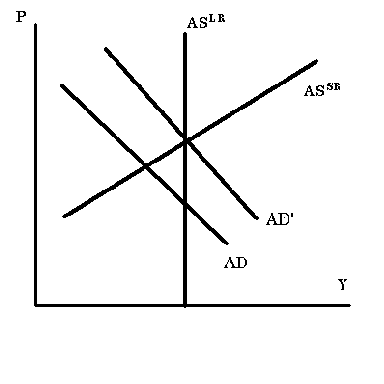
Figure 13-7 shows the basic idea behind this proposal. If the aggregate demand curve is at AD, the economy can be brought back to full employment by a judiciously increasing the money supply until the aggregate demand curve shifts to the left to AD'. |
|||||||||||||||||||||||||||||
|
|
|||||||||||||||||||||||||||||
|
|||||||||||||||||||||||||||||
Impact on Interest Rates |
|||||||||||||||||||||||||||||
|
The panel also discussed how an increase in the money supply would affect interest rates. Everyone understood Fisher's Law, |
|||||||||||||||||||||||||||||
|
rN
@ reR + pe |
|||||||||||||||||||||||||||||
|
and knew that the Central Bank could, by changing the growth rate of the money supply could change the expected inflation component. They also knew that there was a risk – a real risk – that the public would view the increase in the money supply as inflationary and hence change inflationary expectations. |
|||||||||||||||||||||||||||||
|
|
|||||||||||||||||||||||||||||
|
Could the Central Bank change the real component? The basic economics model taught at the University of Middle Bedrock, stresses the intersection of the demand and supply of loans sets interest rates, and that the Central Bank has no control over the real rate. |
|||||||||||||||||||||||||||||
|
However, this point is not widely understood. Indeed, many people think the Central Bank's primary task is to control the interest rate. In the United States, newspaper financial columns and televised financial publications such as CNBC are full of stories about how the American Central Bank, the Federal Reserve System controls interest rates. |
|||||||||||||||||||||||||||||
|
· When the Federal Reserve System decreases the federal funds rate, newscasters say it is following a loose monetary policy. |
|||||||||||||||||||||||||||||
|
· When the Federal Reserve System increases the federal funds rate, newscasters say it is following a tight monetary policy. |
|||||||||||||||||||||||||||||
|
This confusion arises because the simple model taught in most economics courses leaves out some details. |
|||||||||||||||||||||||||||||
|
|
|||||||||||||||||||||||||||||
|
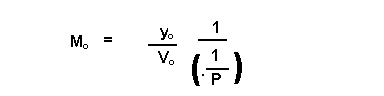
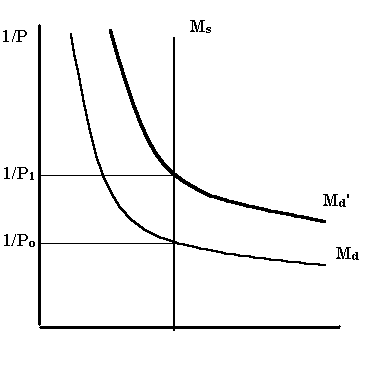
To see where the confusion arises, recall the basic money demand and supply model Figure 13-8, showing how the price level will adjust to a change in the money supply. This graph measures money supply and money demand in nominal terms. The vertical axis measures 1/P, not P.[2]The nominal money supply is a vertical line, since it is whatever the Central Bank wants it to be. |
|||||||||||||||||||||||||||||
|
As to the demand for nominal money balances, recall the equation of exchange: |
|||||||||||||||||||||||||||||
|
|
|||||||||||||||||||||||||||||
|
It follows from the equation of exchange that the demand for nominal money balances is |
|||||||||||||||||||||||||||||
|
|
|||||||||||||||||||||||||||||
|
|
|||||||||||||||||||||||||||||
|
|||||||||||||||||||||||||||||
|
Thus the smaller the value of (1/P) the larger the demand for nominal money balances.[3] |
|||||||||||||||||||||||||||||
|
When the Central Bank increases the money supply from Ms to Ms', the effect will be, as Figure 13-9 shows, to raise the price level from Po to P2. |
|||||||||||||||||||||||||||||
|
|||||||||||||||||||||||||||||
|
Of course, this graph assumes that prices adjust instantly to the decision to increase the money supply. Thanks to imperfect information effects, there may be a lag between the change in the money supply and the adjustment in prices. If that turns out to be the case, money supply would exceed the demand for money. Something would have to give. What would give, of course, would be a demand shifter for the demand for money. As we know the demand for money is a function of the interest rate. The lower the interest rate, the greater the amount of money demanded. Thus, if you increase the money supply and prices take some time to adjust, the interest rate may have to fall temporarily to keep supply and demand in balance. As it does, the money demand function will shift to the right, as Figure 13-10 shows. |
|||||||||||||||||||||||||||||
|
|||||||||||||||||||||||||||||
|
Of course, this temporary effect will last only until prices have adjusted. No one believes it would take more than a year for prices to adjust, so the power is temporary. |
|||||||||||||||||||||||||||||
Increase Government Spending or Cut Taxes |
|||||||||||||||||||||||||||||
|
Figure 13-11 shows the arguments for cutting taxes or increasing spending. If the Government increases its spending, the G component of aggregate demand, Y = C + I + G + (X-M) increases and the aggregate demand curve shifts to the right. If spending is increased enough aggregate demand will shift to AD'. |
|||||||||||||||||||||||||||||
|
The government can cut taxes. If it does so, people will have more income and thus will increase consumption demand. The effect will be to increase the C component of aggregate demand Y = C + I + G + (X-M). If taxes are decreased enough aggregate demand will shift to AD'. |
|||||||||||||||||||||||||||||
|
|
|||||||||||||||||||||||||||||
|
|||||||||||||||||||||||||||||
Other Options for the Government |
|||||||||||||||||||||||||||||
|
Some economists said that the list of options was incomplete. They noted that |
|||||||||||||||||||||||||||||
|
· Middle Bedrock's problems could also be addressed by government measures to stimulate investment demand, and reminded the audience that when John Kennedy was President, the United States had implemented an Investment Tax Credit, a disguised subsidy to investment in the 1960's as a means of fighting a recession. |
|||||||||||||||||||||||||||||
|
· The United States had also used a series of wage and price controls during the Nixon Administration to try to push down the short run aggregate demand curve. |
|||||||||||||||||||||||||||||
|
· Other nations had followed a policy of manipulating their international exchange rates as a means of encouraging exports and discouraging exports. Again, the basic idea was to push the aggregate demand curve to the right. |
|||||||||||||||||||||||||||||
Do Nothing |
|||||||||||||||||||||||||||||
|
The fourth option is to do nothing. |
|||||||||||||||||||||||||||||
|
· The recession came about because of imperfect information. Long run aggregate supply differed from short run aggregate supply only because people were being fooled by what was going on. Given time, the short run aggregate supply curve would rotate back to the long run aggregate supply curve as shown in Figure 13-12. As it did, the problem would correct itself. For instance, once the short run aggregate supply curve had rotated to ASSR', the difference between GDP and full employment GDP (measured by long run aggregate supply) would have been cut in half. |
|||||||||||||||||||||||||||||
|
· The panel had agreed that the recession might well be due to inept government policies. The options of increasing the money supply, cutting taxes or raising spending might also prove to be inept. |
|||||||||||||||||||||||||||||
|
|
|||||||||||||||||||||||||||||
Dissenting Views |
|||||||||||||||||||||||||||||
|
Several economists took sharp exception to the discussion about Middle Bedrock. They pointed out that however it might be relevant to that country, the analysis and prescriptions did not apply to some recent experience outside the United States. In the 1990's, Europe had experienced a period of low growth. Pacific Rim countries had undergone a significant recession in the 1990's from which they were just recovering. To give one more example, from the 1990's, Russian GDP had declined sharply. However, these recessions were quite different in character, and it was foolish to talk about manipulating the aggregate demand curve in response. |
|||||||||||||||||||||||||||||
The Soviet Union |
|||||||||||||||||||||||||||||
|
Before disintegrated at the end of the 1980's, the Soviet Union had been a centrally managed economy with very little reliance on market forces. For years, however, the economy had been in difficulty. In 1985, Mikhail Gorbachev became head of the Communist Party and began a series of policy changes ostensibly designed to reform and renew the Communist System. While there is considerable disagreement over just what happened in the Gorbachev era, the result was the abandonment of the communist system and the dismantlement of the Soviet Union at the end of 1991. |
|||||||||||||||||||||||||||||
|
Many economists had expected that the end of the Communist System would bring a period of economic growth to Russia. In fact, the reverse happened. By a number of measures, Russian GDP had fallen dramatically. At the same time, Russia had suffered from a major inflationary period. In the 1980's, the Ruble was "officially" at par with the US dollar, but by 2000, had fallen to about 20,000 Rubles to the dollar.[4] A lot of money was printed and it had not made the situation better. |
|||||||||||||||||||||||||||||
|
What was going on? |
|||||||||||||||||||||||||||||
|
Figure 13-13 summarizes the Russian situation at the end of the Communist Era. Aggregate supply and aggregate demand would have been in balance with a price level of Po. However, the Communists had not allowed normal market forces to work. Thus, the effect had been to keep the price level at P1, well below Po. The consequence was that aggregate demand significantly exceeded aggregate supply. The old Soviet Union had significant shortages. There were jokes about lines to stand in lines to get goods. |
|||||||||||||||||||||||||||||
|
|
|||||||||||||||||||||||||||||
|
|||||||||||||||||||||||||||||
|
If the new Russian State had made a rapid move to adopt the basics of economic freedom – free markets, the rule of law and the like – the effect would have been to shift the aggregate supply curve to the right. Perhaps inflation was inevitable, but the standard of living would have improved. Certainly, the transition would have been difficult and not as smooth as this simple graph suggests, but life would have gotten better. |
|||||||||||||||||||||||||||||
|
Alas, that is not what happened in Russia. Instead, the Yeltsin era brought a complete collapse in basic institutions inside Russia. Corruption became endemic, as criminal syndicates known as the "Russian Mafia" arose. Tax policy became quixotic, with the passage of new bizarre taxes collected on a haphazard basis. Moreover, any passing thought of using Russian courts or administrative processes to protect property rights was only that – just a passing thought. In short, aggregate supply decreased, because the incentives to produce collapsed. |
|||||||||||||||||||||||||||||
|
At the same time, Russian Authorities speeded up the rate of growth of the money supply. Figure 13-14 shows what has been happening. The reduction in economic incentives has caused the aggregate supply curve to shift to the left, while the aggregate demand curve, thanks to rapid injections of money is moving up. The effect is higher prices and lower output. |
|||||||||||||||||||||||||||||
|
|
|||||||||||||||||||||||||||||
|
|||||||||||||||||||||||||||||
|
This recession is not due to imperfect information, where shifts in aggregate demand could bring the economy back to equilibrium. Measures to stimulate aggregate demand simply cause more inflation. The Russian problem called for measures to deal with the problem that had caused the recession in the first place – reduction in aggregate supply. Russia simply had to get its house in order. |
|||||||||||||||||||||||||||||
The Pacific Rim |
|||||||||||||||||||||||||||||
|
Discussion turned next to the recession that broke out in the Pacific Rim in the mid 1990's. During the 1980's and the early 1990's, a number of Asian countries (Thailand, South Korea, Taiwan, and Malaysia) had experienced rapid economic growth. These countries were the "Poster Children" for the possibilities for nations adopting pro-growth policies. The economies were essentially "open" economies, doing significant trading with the United States. They had pegged their currencies to the American dollar. In many respects, they thought of themselves as using the dollar, inasmuch as much of their commerce took place with the United States. |
|||||||||||||||||||||||||||||
|
In 1996, problems arose in Thailand. Its financial institutions had not kept pace with its rapid economic development. Banks did not follow prudent business practices; many corporations still borrowing money were essentially bankrupt.[5] In 1996, both Thais and foreign investors lost confidence in the Thai economy in general and in the domestic Thai currency, the Baht in particular. Investors tried to take their funds out of Thailand. That meant they wanted to exchange Bahts for Dollars. Figure 13-15 shows what happened. Because so much of Thailand's economy was in dollar terms, and because people essentially lost confidence in the Baht, it is appropriate to draw the Thai price level in terms of the dollar, not the Baht. |
|||||||||||||||||||||||||||||
|
Notice what the increased demand for the dollar does. Recall our basic graph for the demand and supply of money. Increased demand for the dollar in Thailand meant that Velocity fell. In terms of our basic demand model, the shift to the left in the money demand curve means lower prices. Figure 13-15 shows this effect. |
|||||||||||||||||||||||||||||
|
Figure 13-16 shows the shift in the aggregate demand curve, coming about because of the decreased Velocity. |
|||||||||||||||||||||||||||||
|
|
|||||||||||||||||||||||||||||
|
|||||||||||||||||||||||||||||
|
|
|||||||||||||||||||||||||||||
|
|||||||||||||||||||||||||||||
|
When the demand for the dollar rose in Thailand, Velocity fell. It took more dollars to support the Thai economy. The consequence is that the aggregate demand curve fell, or moved to the left. |
|||||||||||||||||||||||||||||
|
|
|||||||||||||||||||||||||||||
|
The upshot was that Thailand went through a classic recession caused by a movement along the short run aggregate supply curve, when we measure prices in dollars. The price of goods in Thailand, measured in Dollars, fell. |
|||||||||||||||||||||||||||||
|
At the same time, because people were trying to get out of Baht, the Baht-dollar exchange rate was changing dramatically. The Baht fell significantly in value, and it looked like there was substantial inflation in Thailand, measured in terms of Baht. |
|||||||||||||||||||||||||||||
|
What was Thailand to do? The classic prescriptions would not have worked. If the Thai central bank had printed more Baht, it would not have shifted the aggregate demand curve to the left, since that had essentially become an aggregate demand curve measured in terms of dollars. More Bahts in circulation would simply have made the Baht less valuable and would have cause more inflation in terms of the Baht. |
|||||||||||||||||||||||||||||
|
The Thai government could do two things. First, it could turn – as it did – to the International Monetary Fund for a loan of Dollars to increase the domestic supply of dollars and thus help shift the aggregate demand curve back to the right. Second, it could begin fixing Thai monetary institutions to restore confidence in the Baht. |
|||||||||||||||||||||||||||||
|
Of course, this was not the end of the problems in Asia. Thanks to "contagion effects", nicely illustrated by what happened in the Pacific Rim, the problem spread. Many other countries had economic development similar to Thailand's. There had always been concerns about the solvency of financial institutions in these countries. When Thailand's financial institutions collapsed, many lost confidence in the financial institutions of the other countries, particularly Indonesia and South Korea. Thus the demand for dollars rose there as well and the story of Figure 13-15 applied throughout the Pacific Rim. |
|||||||||||||||||||||||||||||
Summing Up |
|||||||||||||||||||||||||||||
|
The Economist General then took the floor to make two points. |
|||||||||||||||||||||||||||||
What should Middle Bedrock Do? |
|||||||||||||||||||||||||||||
|
Most of the discussion about Middle Bedrock focused on the right mix of Monetary and Fiscal policies to use to combat their recession, or indeed, whether it was appropriate to simply wait it out. He had gotten an advance peak at the presentation of the economists from Lower Bedrock, who planned to return to this topic. He would give his views later, but, for the moment, did not want to steal their thunder. |
|||||||||||||||||||||||||||||
The Recessions of the 1990's |
|||||||||||||||||||||||||||||
|
The Economist General then turned to the analysis of the Russian and Pacific Rim economies. These were surely "real business cycles ", caused my mismanagement of aggregate supply. |
|||||||||||||||||||||||||||||
|
He was in full agreement that the Russians had made fundamental mistakes with their economy. Once the Communist system of central planning disappeared, they had failed to implement a market economy along with all of the legal protections a market economy required. Thus, they had gotten the worst of all possible worlds: no central planning and no incentives for individual entrepreneurship. It was high time for the Russians to get their act together and begin market reforms. Whether they would, of course, was unclear. |
|||||||||||||||||||||||||||||
|
He did note that one important omission. Even more than in Thailand, Russians had lost confidence in the domestic currency. To keep the story simple, the Russian experience had not talked about the Russian flight to the dollar. This flight was not caused, as it was in the Pacific Rim, because the economy was essentially "dollarized", but because of fundamental distrust of the Russian State. In fact, the Russians also borrowed from the International Monetary Fund to increase their supply of dollars. Much to the chagrin of the IMF, Russians had stolen the $15 billion they borrowed. They had also defaulted on their international debts, completely wrecking any credibility they had in international financial markets. |
|||||||||||||||||||||||||||||
|
This lack of credibility spelled serious future problems for the Russians. |
|||||||||||||||||||||||||||||
|
As to the Pacific Rim, he also agreed that the fundamental problem was a collapse of their financial institutions. He had to point out that viewing the economies as essentially dollarized, was, in fact, a novel one. It was certainly ingenious and insightful, but not one that would be shared by all economists. |
|||||||||||||||||||||||||||||
|
However, the major point was not in doubt. The financial institutions of the Pacific Rom failed. They needed to be repaired. He could not help but note that, in the 19th century, during a period of rapid economic growth, the United States had also had similar problems with their financial institutions. He suggested that Americans remember some of their own economic history before tut-tuting the rest of the world. He also noted good news and bad news. The Asian economies were coming out of their recessions, which was certainly good news. The sad news was the steam seemed to be running out of their efforts to fix their financial institutions. The consequences might be a recurrence of the problem at some time in the future. |
|||||||||||||||||||||||||||||
Relation to the Text |
|||||||||||||||||||||||||||||
|
Each lecture ends with a section relating it to the text. In some cases, material is omitted, either because the text covers it well enough or because it is not worth learning. In other cases, material is added. Each of these “lectures” will end with a brief note relating the lecture to the text, describing what material is left to the student to learn alone and what material may safely be skipped. |
|||||||||||||||||||||||||||||
Which Chapters does this lecture cover? |
|||||||||||||||||||||||||||||
|
|
|||||||||||||||||||||||||||||
What material is new? |
|||||||||||||||||||||||||||||
|
The discussion of the Russian and Thai recessions is new, as is the discussion of currency boards as a means of getting credibility. |
|||||||||||||||||||||||||||||
|
©2000 by
Greg Chase and Charles W. Upton. If
you enrolled in Principles of Macroeconomics at Kent State University, you
may print out one copy for use in class.
All other rights are reserved. |