Lecture 14: Policy II – Domestic and International Policy Rules |
||||||||||||||||||||||||||||||
Lower Bedrock |
||||||||||||||||||||||||||||||
|
The panel of economists from Lower Bedrock apologized for not having much to discuss. Their inflation rate was quite low, and their unemployment rate was relatively close to the natural rate. Thus, they had no short turn economic problems. However, candor compelled them to admit that the difference between Lower Bedrock and their neighbors was luck. They wanted to take advantage of their good fortune to focus on what kind of policy rules they should adopt to prevent – or at least reduce – the likelihood of them having similar problems in the future. |
||||||||||||||||||||||||||||||
|
At the outset, they agreed that there were important lessons to learn from the experience of Russia and the Pacific Rim. If they mismanaged the basics of the economy, they would have trouble. They wanted to concentrate on the narrower question of stabilizing output and prices. |
||||||||||||||||||||||||||||||
|
Their problem was simple. Lower Bedrock had just selected a new head of its Central Bank, who faced a number of problems: how to redecorate his office? What will be the menu in the private dining room? However, the new central banker also faced a more important and more serious policy: managing monetary policy. Three questions had been raised: |
||||||||||||||||||||||||||||||
|
· Some of his advisors were arguing for a discretionary monetary policy, to keep aggregate demand and long run aggregate supply in Balance. Others were arguing against a discretionary monetary policy, and instead for a non-intervention policy. |
||||||||||||||||||||||||||||||
|
· Questions had been raised about the actual status of the Central Bank. Some were proposing that it be abolished or substantially restructured. |
||||||||||||||||||||||||||||||
|
· The Central Bank also had responsibility for international monetary policy, and the head wanted to look at some options. |
||||||||||||||||||||||||||||||
Domestic Monetary Policy |
||||||||||||||||||||||||||||||
|
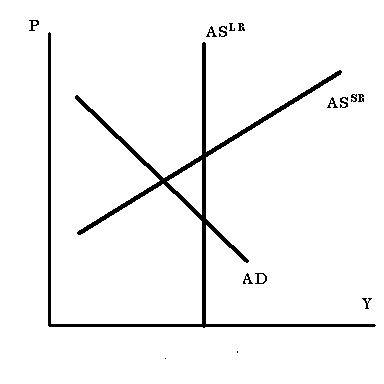
The basic issue underlying the policy debate was quite simple. Thanks to new technology, capital accumulation and population growth, aggregate supply continued to grow each year in Lower Bedrock. In theory, aggregate demand should grow at the same rate. In practice, there was always some slippage. In some years, aggregate demand would be less than aggregate supply; in yet other years aggregate demand would be more than aggregate supply. Figure 14-1 shows the possibilities. |
||||||||||||||||||||||||||||||
|
In the first case, the Central Bank can increase the money supply and move the aggregate demand curve to the left. In the second case, it can decrease the money supply and move the aggregate demand curve to the right. |
||||||||||||||||||||||||||||||
|
|
||||||||||||||||||||||||||||||
|
||||||||||||||||||||||||||||||
|
This is essentially the policy followed in the United States by the Federal Reserve System. Most discussions of monetary policy are generally in terms of what the Federal Reserve System should do now, and in terms of loose or tight monetary policy. |
||||||||||||||||||||||||||||||
|
· The Federal Reserve System is following a loose monetary policy if it increases the growth rate of the monetary base or some broader measure such as M1 or M2. (Sometimes people talk about a loose monetary policy as one that decreases the federal funds rate.) |
||||||||||||||||||||||||||||||
|
· The Federal Reserve System is following a tight monetary policy if it decreases the growth rate of the monetary base or some broader measure such as M1 or M2. (Sometimes people talk about a tight monetary policy as one that increases the federal funds rate.) |
||||||||||||||||||||||||||||||
Policy Rules |
||||||||||||||||||||||||||||||
|
The central bank has essentially three choices |
||||||||||||||||||||||||||||||
|
· A Simple Policy Rule |
||||||||||||||||||||||||||||||
|
· A Discretionary Policy Rule |
||||||||||||||||||||||||||||||
|
· A Contingent Policy Rule |
||||||||||||||||||||||||||||||
Simple Policy Rules |
||||||||||||||||||||||||||||||
|
A simple rule, is something like: |
||||||||||||||||||||||||||||||
Conduct open market operations so that M1 grows by five percent per year. |
||||||||||||||||||||||||||||||
|
There would be arguments about what the right rule is. Many people, for instance, would want a role to stabilize the rate of growth of M2 at around four percent a year. That qualification aside, the automatic nature would appeal to non-interventionists. Another way of stating this rule is: |
||||||||||||||||||||||||||||||
Adopt a long-term policy for the money supply. If it turns out that
|
||||||||||||||||||||||||||||||
Discretionary Monetary Policy Rules |
||||||||||||||||||||||||||||||
|
In the United States, as in most major countries, its central bank, the Federal Reserve System, follows a very simple discretionary policy rule: |
||||||||||||||||||||||||||||||
We will do what we think best. We
will set monetary policy according
|
||||||||||||||||||||||||||||||
|
Many years ago, the Federal Reserve System conducted discretionary monetary policy in secrecy. The Federal Open Market Committee met in secret and never announced what policy decisions it had taken. A whole generation of "Fed Watchers" grew up who attempted to figure out what the Federal Reserve System was up to. Today the system has become more open and transparent. The FOMC announces its decisions as they make them and gives an indication of the direction in which it is leaning. Thus it might say something like "we are adopting a tight monetary policy, but we see no reason why it might become tighter in the future" or perhaps "we are adopting a tight monetary policy and it is likely that it will become tighter in the future". Nonetheless, Fed Watchers still keep themselves employed for the policy is ultimately discretionary. |
||||||||||||||||||||||||||||||
Contingent Policy Rules |
||||||||||||||||||||||||||||||
|
Under a contingent policy rule, the money supply varies depending on unemployment, inflation, or other economic variables. A very simple one would be |
||||||||||||||||||||||||||||||
If the unemployment rate is between four and six percent, let the money supply grow at 3% per year. If the unemployment rate is above six percent, let the money supply grow at 5% per year. If the unemployment rate is below four percent, let the money supply grow at 1% per year. |
||||||||||||||||||||||||||||||
|
This is not a good policy rule – in fact, it is a bad one – but it is a good illustration of a contingent policy rule. Note that this rule does not follow something simple like "if aggregate demand is below aggregate supply then…" since aggregate demand and aggregate supply are quite useful concepts, but hard to distinguish in practice. |
||||||||||||||||||||||||||||||
|
Debates about monetary policy take up two issues: |
||||||||||||||||||||||||||||||
|
· Should the Central Bank do something or should it do nothing? |
||||||||||||||||||||||||||||||
|
· If the Central Bank is going to do something, should it follow a discretionary policy or an automatic rule? |
||||||||||||||||||||||||||||||
The case for doing nothing |
||||||||||||||||||||||||||||||
|
Those advocating a non-intervention policy make several points points. |
||||||||||||||||||||||||||||||
Lincoln's Law Works |
||||||||||||||||||||||||||||||
|
The recession came about because of imperfect information. It is not that people are stupid, but merely that people are fallible. Lincoln's Law tells us that people do wise up. Consider the situation in Middle Bedrock. Given time, the short run aggregate supply curve would rotate as shown in Figure 14-2. As it did, the problem would correct itself. For instance, once the short run aggregate supply curve had rotated to ASSR', the difference between GDP and full employment GDP (measured by long run aggregate supply) would have been cut in half. |
||||||||||||||||||||||||||||||
|
|
||||||||||||||||||||||||||||||
Lags in discretionary policies |
||||||||||||||||||||||||||||||
|
It takes time for discretionary policies to come into effect. There are two kinds of lags in the effects of policies. |
||||||||||||||||||||||||||||||
|
· Lags in implementing policies because of lags in getting information about the economy. By the time the Central Bank gets information and act upon a situation it may have already resolved itself. For example, the Board of Governors of the Federal Reserve System could get stale information, indicating that the economy is in a recession, and stimulate the economy by raising the money supply. However, it is possible that the economy is already on its way out of the recession. If so, the stimulus actually over stimulates the economy by the time that it actually takes effect, thus, causing a wider fluctuation in the business cycle. |
||||||||||||||||||||||||||||||
|
· Lags in effects of discretionary policies. There are also lags in the time for a policy to have an effect once it has been decided. Thus, even with timely information, the economy may already have moved from say recession to boom (say) before the policies begin to take effect. |
||||||||||||||||||||||||||||||
Lack of Information |
||||||||||||||||||||||||||||||
|
Some panelists stressed that economic management was limited by incomplete information. Others pointed out that the problem went well beyond this. People do not always respond the same way to a change in economic conditions, and are conditioned on what they expect the government to do. They pointed to the dilemma in Upper Bedrock. There, people were expecting the government to increase the money supply by 15 percent and thus were expecting 12 percent inflation. The same thing could, of course happen to Middle Bedrock. This was not the first recession to occur in Middle Bedrock, not would it be the last. Suppose, for instance, that Middle Bedrock adopted a policy of always increasing the money supply to deal with the recession. People would then begin to expect an increase in the money supply and hence in the price level whenever a recession began. The effect would be to shift the short run aggregate supply curve up by the expected inflation, and give the government the dilemma shown in Figure 14-3. The shift in the short run aggregate supply curve would just offset the increase in the aggregate demand curve induced by the increased money supply. |
||||||||||||||||||||||||||||||
|
Now we can see what happens when the Central Bank increases the money supply and shifts the aggregate demand curve to AD'. The economy will have grown to expect the policy and the net effect will be to leave the economy at Y1. Indeed the problem is worse than that. Because the economy has come to expect the increase in the money supply, if the Central Bank does not increase the money supply, they will still get the shift in the short run aggregate supply function and the economy will slip back to Y2. In words, the economy will be worse off. That is, they must increase the money supply just to stay still. |
||||||||||||||||||||||||||||||
|
|
||||||||||||||||||||||||||||||
|
||||||||||||||||||||||||||||||
|
Here, the panel reminded everyone of the credibility issue discussed earlier. |
||||||||||||||||||||||||||||||
The History |
||||||||||||||||||||||||||||||
|
There is a fundamental rule in medicine: do no harm. In the case of a discretionary monetary policy, it is possible that "doing something" will actually result in making things worse. The panel reminded everyone how the United States Federal Reserve System had, on many occasions, abused its discretionary authority and made things worse off. |
||||||||||||||||||||||||||||||
Summary |
||||||||||||||||||||||||||||||
|
The panel knew that new head of the Central Bank liked examples, and had tried to recast the problem in terms of running a pizzeria, say Miller's Pizzeria. Suppose a manager hires a new waiter. He hopes and expects the new waiter to make good. However, new waiters often get off to a rocky start. Should the manager intervene and coach the waiter? |
||||||||||||||||||||||||||||||
|
One school of thought says the manager should not. Consumers control tipping. A poor waiter will get poor tips, and will shape up on his own, or will quit. Thus, there is something to be said for doing nothing. If the manager does try to intervene, he suffers from two problems. He cannot be everywhere and may not really know what is going on. By the time he gets around to coaching the waiter, he may already have learned the lesson and any advice will be gratuitous and be resented. Further, if the manager is always intervening, the waiter will learn the wrong lesson and stop exercising discretion. Clearly, a successful waiter, as indeed any successful employee should exercise discretion and show initiative. Thus, the process of intervention may be counterintuitive. Moreover, the manager will remember the many cases where is advice was a disaster and he would have been better keeping his mouth shut. |
||||||||||||||||||||||||||||||
|
Of course, "never" is a strong word. There are always cases where a manager will intervene, if for no other reason than to fire a hopelessly inept waiter. The right lesson is that intervention should be sparing. |
||||||||||||||||||||||||||||||
|
So too should it be with the economy. |
||||||||||||||||||||||||||||||
The case for a Policy Rule |
||||||||||||||||||||||||||||||
|
Discussion usually focuses on discretionary monetary policy. The question is whether the economy is best served by discretionary intervention or by a contingent policy rule. |
||||||||||||||||||||||||||||||
|
The case for discretionary policy is obvious. Policy decisions should be made on all the information and any simple rule will fail to take into account all information. |
||||||||||||||||||||||||||||||
|
On top of that, the issue is what the policy rule should be. Just saying that you should have a policy rule does not tell you what the "right" policy rule should be. |
||||||||||||||||||||||||||||||
Policy Rules have their own benefits |
||||||||||||||||||||||||||||||
|
A credible rule for actions can lead to better results than even the best actions chosen on a case-by-case (discretionary) basis. Consider, for instance, a rule saying you will never negotiate with terrorists. Never is a very strong word. You can always find examples where negotiating would seem to be the best policy. But the United States government, like many governments, refuses to negotiate with terrorists. It believes that a policy of refusing to negotiate reduces the incentive for terrorists to take hostages. Rules that are announced in advance and that are credible, that people believe the government will follow, can produce better results than policies not based on rules, because credible rules change peoples’ incentives, and decreases uncertainty about the economy. This allows people to make better decisions because they know what to expect. |
||||||||||||||||||||||||||||||
Fiscal Policy |
||||||||||||||||||||||||||||||
|
While the head of the Central Bank has no authority over fiscal policy, the panel also considered discretionary fiscal policy. |
||||||||||||||||||||||||||||||
|
They noted that economists spend less and less time worrying about discretionary tax and spending policies as a means of fighting recessions. |
||||||||||||||||||||||||||||||
|
Two kinds of lags complicate fiscal policies – lags in implementing policies and lags in the effects of fiscal policies. In the United States, for instance, the Federal Reserve System can alter the money supply relatively quickly. A decision to change tax and spending policies must work its way through Congress and the White House. Though these two agencies can move quickly on occasion, it normally takes a year or two for them to make changes in tax and spending policies. Moreover, in the case of changes in spending policies, it sometimes takes even longer for spending to actually increase even after authorization. |
||||||||||||||||||||||||||||||
|
Credible rules for fiscal policy can improve economic performance by changing people's incentives. The best tax and spending policies involve a good deal of constancy. It is much like driving, where good practice calls for maintaining a steady speed and not moving about in the road. A poor driver veers about on the roadway and is constantly accelerating and decelerating. |
||||||||||||||||||||||||||||||
|
As an example of the last point, the panel spoke specifically about the tasks of maintaining highways and sport stadiums. While they certainly favored appropriate investments in both, being careful to point out that the appropriate investment might be zero: not all proposed highways should be built. There was a significant body of research suggesting that the trend to publicly financed sports stadia (they could not resist using the correct Latin plural) was essentially a rip-off of the public for the benefit of team owners. |
||||||||||||||||||||||||||||||
|
That point notwithstanding, the panel certainly favored public investment in all sorts of facilities. However, they argued that the best way to build these projects was on a steady basis. A project should be selected because its benefits exceeded its costs, and not be held hostage to the business cycle. Thus it made no sense to argue, "Build this road as a means of fighting a recession" or to argue "Do not build this road now: delay building it until we are in a recession".[1] |
||||||||||||||||||||||||||||||
|
As to tax cuts and increases, the panel noted that, at one time, they had been much in vogue in the United States as a means of dealing with business cycles, but had passed out of favor in recent years. In 1981, for instance, President Reagan enacted a significant tax cut, but did so on the grounds that it would promote economic growth. In 1993, President Clinton, increased taxes during a recession, but did so on the grounds that the tax increase would promote economic growth by reducing the deficit. The irony of the inconsistency was noted, but not commented on. |
||||||||||||||||||||||||||||||
Ricardian Equivalence |
||||||||||||||||||||||||||||||
|
Indeed there is a controversy about whether tax cuts are of any value in fighting a recession. The demand and supply of loans graphs shown in Figure 14-4 illustrate the concept. Suppose we cut taxes by $100 billion. We increase the demand for loans to finance government spending by $100 billion. At the same time, we know that individuals will not spend the entire balance of the tax cut. Thus there will be an increase in the supply of loans. One view, shown in the upper left-hand corner, is that the increase in demand is greater than the increase in supply. If so, interest rates rise and aggregate demand increases, as shown in the lower left-hand panel. |
||||||||||||||||||||||||||||||
|
The other view, sometimes labeled Ricardian Equivalence, is that the increase in the supply of loans equals the increase in the demand for loans. |
||||||||||||||||||||||||||||||
|
||||||||||||||||||||||||||||||
|
If so, interest rates remain constant and aggregate demand does not increase. The right hand side of Figure 14-4 represents this view. |
||||||||||||||||||||||||||||||
Impact on Aggregate Demand |
||||||||||||||||||||||||||||||
|
Figure 14-4 also illustrates the controversy over aggregate demand. If people save less than $100 billion, the supply of loans increases by less than $100 billion, and there is not an exact offset to the increase in the demand for loans. Further, there is an increase in aggregate demand. For example, if the supply of loans increases by (say) $90 billion, then consumption spending is rising by $10 billion, which means a $10 billion increase in aggregate demand. |
||||||||||||||||||||||||||||||
|
Once we know what is happening to the supply of loans, we know what is happening to aggregate demand. If people save the entire $100 billion, the supply of loans increases by $100 billion, and there is an exact offset to the increase in the demand for loans. Further, there is no increase in aggregate demand. Government spending is not increasing; and, if there is no increase in consumption spending, then there is no increase in aggregate demand. |
||||||||||||||||||||||||||||||
|
The Economist General warned that the view that there is no shift in aggregate demand, formally known as Ricardian Equivalence, is highly controversial. Most economists do not believe in Ricardian Equivalence. Partial Ricardian Equivalence, the view that the shift in the supply of loans will offset the bulk of the increase in the demand for loans is not controversial. |
||||||||||||||||||||||||||||||
Summing Up |
||||||||||||||||||||||||||||||
|
Discretionary fiscal policy is so cumbersome that any management of business cycles is best left to the Central Bank. |
||||||||||||||||||||||||||||||
Restructuring the Central Bank |
||||||||||||||||||||||||||||||
|
As in many countries, the Central Bank is relatively independent of the government. This independence mirrors that of the Federal Reserve System. In the United States, the President and Congress have only limited power to control the System. There, the Federal Reserve System is very different from (say) the Department of Agriculture, who must do as directed by its boss, the President. To be sure, Congress has forced the Chairman of the Federal Reserve System to meet twice a year with the Joint Economic Committee to discuss economic policy. These sessions have become famous for statements like “the economy will continue to grow unless it contracts” and the like. |
||||||||||||||||||||||||||||||
|
The panel noted that some Americans
advocate placing the Federal Reserve System under the direct control of the
President and the Congress. While the
idea has some logic – the Federal Reserve System has essentially become a
fourth branch of government – most economists would disagree. The data indicate that countries with independent
monetary authorities have lower inflation rates than countries without
independent monetary authorities.
Why? When the elected
government directly controls the monetary authority, the temptation to print
money is hard to resist. Independent monetary authorities have more
credibility than political monetary authorities. |
||||||||||||||||||||||||||||||
|
Indeed the panel noted that in the United Kingdom, one of the first
steps of the new Blair administration had been to strengthen the independence
of the Bank of England, the British Central Bank. They also noted that the new European Central Bank enjoyed
broad autonomy from the governing councils of the European Community. In short, the case for independence seemed
clear. |
||||||||||||||||||||||||||||||
No Central Bank |
||||||||||||||||||||||||||||||
|
At the other extreme, the panel also noticed the proposal, made from time to time in the United States to abolish the Federal Reserve System and letting the banks compete among themselves. Each bank would have complete independence to issue its own money. Of course, a dollar issued by Key Bank might be worth more or less than a dollar issued by Bank One, but this might be one of the benefits of the system. The American banking system is hobbled by a number of rules and regulations, and complete independence would allow them to compete and issue the best type of financial products. Certainly political control would end. |
||||||||||||||||||||||||||||||
|
In some sense, this idea has already come about. Major banks issue short term certificates of deposit that many corporations and money market funds hold like money. (The denominations are quite large, so forget about acquiring these personally.) |
||||||||||||||||||||||||||||||
|
The drawback to going whole hog with this idea is that it might be very inefficient. If an American writes a check on Bank One say, the recipient may worry about his credit worthiness, but not about Bank One’s. And, if Americans constantly had to compare how much a Key Bank dollar was worth in terms of Bank One dollars, financial transactions would be quite complicated. |
||||||||||||||||||||||||||||||
Relations to International Currencies |
||||||||||||||||||||||||||||||
|
Lower Bedrock has a floating exchange rate, where the value of its currency, the Pebble, fluctuates relative to the American dollar ($), the European Euro (€) and the Japanese Yen (¥). The value of the Pebble is set each day by the laws of supply and demand. |
||||||||||||||||||||||||||||||
|
Many economists were suggesting that Lower Bedrock reconsider its monetary system. Some of the proposals on the table were |
||||||||||||||||||||||||||||||
|
· A return to the gold standard |
||||||||||||||||||||||||||||||
|
· A return to fixed exchange rates |
||||||||||||||||||||||||||||||
|
· Establish a Currency Board |
||||||||||||||||||||||||||||||
A Brief Monetary History |
||||||||||||||||||||||||||||||
|
Most industrial nations have used either a gold standard, fixed exchange rates or floating exchange rates. |
||||||||||||||||||||||||||||||
The Gold Standard |
||||||||||||||||||||||||||||||
|
The gold standard prevailed from the 19th century, until just before World War II. Each country pledged to convert its currency into gold, upon demand, at a fixed exchange rate. This system broke down in 1931 when Britain stopped buying and selling gold. As an example of how the gold standard worked, the US government offered to buy or sell gold at the set rate of $20.67 an ounce. The British offered to buy or sell gold at the set rate of £4.30 an ounce. That guaranteed that 1£ = $4.80, the exchange rate between the dollar and the pound for many years. If the rate differed, buying and selling gold could make money. Remember that gold is a traded good and any other exchange rate guaranteed arbitrage opportunities. |
||||||||||||||||||||||||||||||
|
The system, suspended during World War I, and reinstated at the end of that war, broke down, for good, under the pressures of the Great Depression. The first blow was when the British suspended convertibility in 1931 (which is a polite way for saying they stopped buying and selling gold). |
||||||||||||||||||||||||||||||
Fixed Exchange Rates |
||||||||||||||||||||||||||||||
|
After World War II, the major industrial nations replaced the gold standard with fixed exchange rates. The agreement leading to fixed exchange rates is called the Bretton Woods system, after the small New Hampshire town where economists met during World War II to plan the system. (There is a great hotel there, with elegant rooms, a great restaurant, and prices to match. When economists are planning to meet for several weeks on an expense account, they are not stupid). The Bretton Woods agreement ran from the end of World War II until 1971. Under this system, the countries of the world agreed to act jointly to maintain fixed exchange rates. All of the currencies in the world were pegged to the US dollar. The monetary authorities were supposed to consult and act responsibly. If a country did expand its money supply too much, then there were several ways to correct this: |
||||||||||||||||||||||||||||||
|
· The US government could agree to purchase the additional foreign currency, and thus reduce the foreign currency money supply. |
||||||||||||||||||||||||||||||
|
· The foreign authorities could agree to take steps to reform their monetary policy. |
||||||||||||||||||||||||||||||
|
· The foreign government could adopt restrictive trade policies. For example, they could restrict the purchase of foreign goods for domestic use. If they did, they reduce the gains from trade. |
||||||||||||||||||||||||||||||
|
· The foreign government could devalue their currency to the dollar. This last step was inconsistent with the basic notion of fixed exchange rates. When it looked like devaluation might occur, there was a lot of exchange speculation. People would begin to unload foreign currency for dollars. If the devaluation occurred, they would make money; if it did not, they would lose nothing. |
||||||||||||||||||||||||||||||
|
The Bretton Woods system finally failed because nations (including the US) valued their monetary independence more than they valued having a fixed exchange rate. Nations could not resist setting their money supply without considering international exchange considerations. |
||||||||||||||||||||||||||||||
Floating Exchange Rates and the Coming of the Euro |
||||||||||||||||||||||||||||||
|
Thus in the early 1970's most nations adopted floating exchange rates. Initially, all European currencies floated. On January 1, 1999, many major European countries joined the European Currency Union, and adopted the Euro, the €, as their currency. Technically Marks, Francs, and Lira are still in circulation, but this is a transition period ending in 2003. Then, there will essentially be three major world currencies: the dollar ($), the Euro (€) and the yen (¥). Some would add the British Pound (£) to this list. However while it is certainly a major world currency, most expect the United Kingdom to enter the European Monetary Union by then. The relative value of these currencies is set in international exchange markets by supply and demand, as indeed is the relative value of other currencies that "float". |
||||||||||||||||||||||||||||||
|
Many countries try a variant of this system: the managed float system (or dirty float). The country lets their currency float freely, but if their currency follows an unfavorable trend, then they will intervene to get their currency back to a desired level. To see how this system works, consider the Japanese-American exchange rate. Suppose that the Yen is trading at 100 Yen = $1. Suppose now that, for some reason, Yen rises to – say – 98 yen to the dollar and the Japanese Government can intervene into currency markets to manipulate the exchange rate. It can turn on its printing presses and begin offering 100 freshly printed Yen for the dollar. If the Yen falls to 102 Yen to the dollar, the government can offer to buy Yen at the rate of 100 to the dollar. It pays for the dollars either with dollars it already owns or by borrowing dollars. |
||||||||||||||||||||||||||||||
|
Managed floats are not a good idea. Attempts to maintain exchange rates by intervening into the exchange markets have generally had disastrous results. In the old days, whenever speculators who suspected an overpriced £ began “shorting” the pound and the Bank of England and the Federal Reserve intervened by buying pounds from speculators. The result was usually that speculators made billions (at the expense of the central banks – which is a polite way of saying that American and British taxpayers lost billions) and the £ was devalued. |
||||||||||||||||||||||||||||||
Returning to the Gold Standard |
||||||||||||||||||||||||||||||
|
To be complete, the panel considered the possibility of recommending that Lower Bedrock resume the Gold Standard. The argument for the gold standard is a simple one. |
||||||||||||||||||||||||||||||
|
Under the Gold Standard, gold flows between countries would adjust the domestic price level in each country. Deflation occurred in countries with less desirable goods by it spending its gold to buy more desirable foreign goods, thereby decreasing the money supply. There would be inflation in the country with the more desirable goods, since they will be receiving gold from selling their goods to other countries and increasing the money supply. Neither government had the power to set prices or the money supply. |
||||||||||||||||||||||||||||||
|
As a practical matter, this gold standard is a major deterrent to inflation. Governments abuse their control over the money supply and cause inflation. A return to the gold standard would end this problem. It would end all political control over the money supply, and reduce the long run inflation rate. |
||||||||||||||||||||||||||||||
|
However, while some economists argue for a return to the gold standard, most disagree. Major discoveries of gold (Cortez, California, etc.) mean that the world gold supply increases, as does the price level. When there are no new gold discoveries, economic growth usually means declining prices. This is exactly what happened in the late 1800’s. From 1880-1896, the price level in the US fell 23 percent, leading some to advocate the use of a gold and silver standard (bimetallism) in order to permit monetary expansion. The evidence from episodes like this suggests that the economy does not adjust well to periods of declining prices. |
||||||||||||||||||||||||||||||
|
In sum, there is little reason to recommend a return to the Gold Standard.[2] |
||||||||||||||||||||||||||||||
The Case for a Fixed Exchange Rate |
||||||||||||||||||||||||||||||
|
The United States uses a fixed exchange rate system internally. ($1 Ohio = $1 New York). Before the Federal Reserve System, there were times where Ohio dollars (say) were not immediately convertible into New York Dollars and it caused all sorts of problems. (We are not saying a dollar goes as far in New York as it does in Cleveland. We are saying that a dollar issued by the Federal Reserve Bank of Cleveland is worth a dollar issued by the Federal Reserve Bank of New York). |
||||||||||||||||||||||||||||||
|
The exchange rates are maintained by having a common monetary authority. The New York and Cleveland Federal Reserve Banks have no control over local monetary policy. It is not possible for the Cleveland Federal Reserve Bank to adopt one monetary policy because it is best for Ohio while the San Francisco Federal Reserve Bank follows another policy because it is best for California. |
||||||||||||||||||||||||||||||
|
The economic history of the United States makes an impeccable case for a fixed exchange rate. A fixed-rate system is much more convenient than a floating-rate system. Because the exchange rate does not change every day (and even every minute), information costs are lower and hence people can plan more easily, knowing what the exchange rate will be. This helps to promote international trade. Under a floating exchange-rate system, exchange rates change frequently. Speculation may cause changes in exchange rates, and (because of short-run price stickiness) relative prices between domestic goods and imports. The resulting overvaluations or under-valuations of money cause economic inefficiencies and may affect a country’s exports, imports, real GDP and employment. In contrast, a fixed exchange rate system can avoid these problems if countries follow appropriate monetary and fiscal policies. |
||||||||||||||||||||||||||||||
|
In fairness, it should be noted that firms can mitigate this exchange rate risk by the judicious use of futures markets in foreign exchange, which allow the purchase of foreign exchange in the future at a price set today. For example, suppose Fred has a contract to purchase 500,000 quarts of Scotch Whiskey, at a price of 1.5£ per quart, with delivery and payment to take place in six months. He does not need to worry about how much that is going to cost him in dollars. He can just call up his bank or broker and purchase a futures contract for £750,000 with delivery in six months at a fixed rate in dollars. Consequently, he removes any exchange rate risk. While the broker or bank will charge for this service, it is another cost of doing business. |
||||||||||||||||||||||||||||||
|
In summary, a fixed-rate system imposes discipline on governments. They cannot raise the money supply rapidly and create high inflation, save at the risk of a major exchange rate crisis. The system fosters international cooperation in setting policies. Indeed, it really requires cooperation. A fixed exchange rate requires that nations surrender sovereignty over their domestic monetary policy. Its Central Bank completely loses its independence. |
||||||||||||||||||||||||||||||
|
In many cases, it appears to be worth it. In January 1999, the European Union began converting to a common currency, the Euro (€). Their decision to go for common money suggests how strong are the advantages of a common currency, or fixed exchange rate. |
||||||||||||||||||||||||||||||
Currency Boards |
||||||||||||||||||||||||||||||
|
The panel then turned to the question of just how Lower Bedrock should proceed. The panel recognized the value of fixed exchange rates, but also recognized that the Bretton Woods agreement is dead. If Lower Bedrock unilaterally simply declared that its exchange rate was set at (say) one Pebble to the dollar, its commitment would not have credibility. International speculators would simply wait for the opportunity to move in for the kill. |
||||||||||||||||||||||||||||||
|
The credible way set a fixed exchange rate is to establish a currency board. Many countries such as Argentina and Lithuania have currency boards instead of a central bank. The main goal of a currency board is to maintain a country’s fixed exchange rate. A foreign currency backs the domestic currency. The currency board has enough reserves that it is willing and able to exchange domestic currency for foreign currency at the country’s fixed exchange rate. Essentially the country has abandoned an independent monetary policy and has decided to stabilize its currency relative to another. The principal reason a country adopts a currency board is to end domestic inflation. This system is credible and foolproof. If the currency board is very public about what it is doing, the citizens will see that there is always enough backing to redeem all of the domestic currency. |
||||||||||||||||||||||||||||||
|
The panel agreed that whatever the merits of a currency board for the Bedrocks, it would be impractical for the United States, which has a quarter of the World's GDP. It is one thing for Argentina or Lithuania or some other small country to peg to the US dollar. To whom should the United States peg? |
||||||||||||||||||||||||||||||
|
Should other countries? Currency boards have appealed particularly to countries such as Argentina with a history of significant domestic inflation. The Argentinean Monetary authorities were always printing new money. The Argentinean Currency Board brought this system to a rapid halt, and brought price stability to the country. An Argentinean Peso is now worth $1 US, and its currency board holds enough American Dollars to guarantee that rate. Any fluctuation in the Argentinean money supply is subrogated to the goal of maintaining parity with the American Dollar. |
||||||||||||||||||||||||||||||
|
Of course, what these countries have really done is to go on a modified version of the Gold Standard, using dollars for Gold. This system has costs. Nations with currency boards have wanted to take advantage of a short run Phillips Curve, by changing monetary policy. The commitment to the currency board meant that they could not. In short, they have gotten relative price stability at the price of surrendering domestic monetary sovereignty. |
||||||||||||||||||||||||||||||
|
To indicate how serious this policy is taken, the President of Argentina has opened discussion of Argentina actually abandoning its own currency, the Peso (1P = 1$) and substituting dollars for Pesos. There are lingering doubts as to Argentina's commitment to the currency board.[3] Getting rid of the Peso would solve this problem. Indeed, Ecuador, where the problems of credibility is more serious, the government is making the final step of converting to American dollars. |
||||||||||||||||||||||||||||||
|
Is a currency board a good policy? It may be credible (or it may not be – will people believe the Currency Board will do its job), but it comes at a price: You cannot have an independent monetary policy. |
||||||||||||||||||||||||||||||
|
The idea of a currency board is controversial. It is gaining sway, however, and will become more commonplace in the future. For example in the summer of 1999, the Canadian Cabinet discussed Canada abandoning its own currency and pegging its currency to the US Dollar. In fact, much Canadian business, particularly for products bought and sold on the world market, is already conducted in American dollars. For many purposes, Canada has already pegged itself to the American dollar. |
||||||||||||||||||||||||||||||
Where is this going |
||||||||||||||||||||||||||||||
|
The Economist General weighted in at this point. He pointed out that the degree of internal trade inside the United States was possible only because of the unified currency and financial institutions. He noted that all three Bedrocks were caught up in the growing movement to international trade. He thought that it would be ultimately necessary for the Bedrocks to join the move to currency boards. |
||||||||||||||||||||||||||||||
|
As to where the currency board movement would end up, he noted that all economists, including the Economist General forecast at their own peril. However, it now seems reasonably clear where the international monetary system is going: |
||||||||||||||||||||||||||||||
|
· In the Western Hemisphere, the economies seem to be moving to a single currency: the US dollar. The nations will link to the dollar, either by currency boards pegging their currency to the dollar, formal adoption of the US dollar or in some cases by widespread informal use of the US dollar. |
||||||||||||||||||||||||||||||
|
· In Europe, the Euro is coming. In 15 years, the rest of Europe will be on the Euro, and it will fluctuate relative to the dollar. In other countries, such as Hungary, who are not technically members of the European Monetary Union, local currencies will end up being pegged to the Euro. |
||||||||||||||||||||||||||||||
|
· In Asia, we need to look down the road. The Chinese economy is taking off, and no one can see an Asian society without the Chinese currency involved. However, this will take time, certainly more than 15 years. We are probably looking at an AMU (Asian Monetary Union), involving China, Japan and Korea. |
||||||||||||||||||||||||||||||
|
The Economist General then proceeded to summarize what he thought was the right policy for a nation to adopt. |
||||||||||||||||||||||||||||||
|
· Fiscal policy was terribly important for a nation's growth and well being. Indeed, he was on his way to a conference of three nations like the Bedrocks where fiscal policy was the primary agenda item. However, he though it had little use as a means of short-run economic stabilization. |
||||||||||||||||||||||||||||||
|
· He suggested the Bedrocks consider pegging to the dollar ($) or the Euro (€). He was sufficiently unaware of whether the Bedrocks traded more with the United States or with Europe, so he would not make a choice. |
||||||||||||||||||||||||||||||
|
· If they did peg, then the question of monetary policy became moot. If the nation either pegged through a currency board or by formally adopting the dollar or Euro, they would not have a monetary policy, any more than any American state had a monetary policy. |
||||||||||||||||||||||||||||||
|
The Economist General was asked what advice he would give the Americans, who could not peg to another country: they were too big. He was not sure what choice to recommend. The state of economic knowledge was not sufficient advanced to answer this question the rigor befitting an Economist General. However, he would caution that any resort to discretionary monetary policy be – and he could not resist the pun –discrete. Attempts to fine tune and whip the economy around with monetary policy would probably fail. |
||||||||||||||||||||||||||||||
Relation to the Text |
||||||||||||||||||||||||||||||
|
Each lecture ends with a section relating it to the text. In some cases, material is omitted, either because the text covers it well enough or because it is not worth learning. In other cases, material is added. Each of these “lectures” will end with a brief note relating the lecture to the text, describing what material is left to the student to learn alone and what material may safely be skipped. |
||||||||||||||||||||||||||||||
Which Chapters does this lecture cover? |
||||||||||||||||||||||||||||||
|
|
||||||||||||||||||||||||||||||
What material is new? |
||||||||||||||||||||||||||||||
|
The discussion of future monetary regimes is new. Stockman does not predict how things are going to turn out. We do. |
||||||||||||||||||||||||||||||
|
Ricardian equivalence is also new. |
||||||||||||||||||||||||||||||
|
©2000 by
Greg Chase and Charles W. Upton. If
you enrolled in Principles of Macroeconomics at Kent State University, you
may print out one copy for use in class.
All other rights are reserved. |
||||||||||||||||||||||||||||||