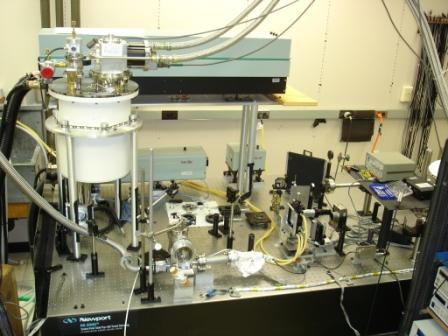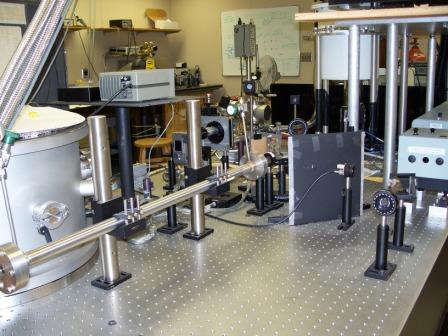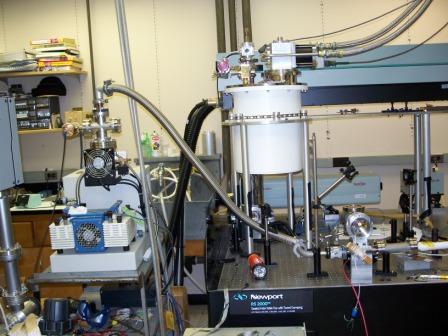

Currently I am working on X-ray light valve (XLV). XVL is a new imaging system to produce high quality digital X-ray images for the early detection of cancer. Unlike existing radiographic system, XLV is a fully integrated digital radiographic system based on three low-cost technologies: (i) amorphous selenium ( a -Se) as an x-ray to charge transducer, (ii) a Liquid Crystal (LC) cell as an analog image display and (iii) an optical scanner, for image digitization. The basic principle behind this technique is that incident X-ray produces charge inside the a-Se sandwiched between two electrodes. Charges are then transported to the other end of the electrode where LC cell is attached. Accumulated charges on the side of the liquid crystal cell allign the liquid crystal molecules producing the image of an object under X-ray exposure. Scanner scans this image for digital storage and analysis.
Before this, I worked on organic semiconductor to characterize them interms of their quality for their potential use as a semiconductor. Standard TOF technique is used for this purpose. In TOF technique a sample of organic compound sandwiched between two electrodes, is irradiated by laser of suitable wavelength. The sheet of charge produced by laser is accelerated toward the opposite electrode. The motion of the charge sheet inside the sample creates the displacement current. By measuring the time of flight of the charge sheet, we measure the quality of the sample to conduct the electricity.
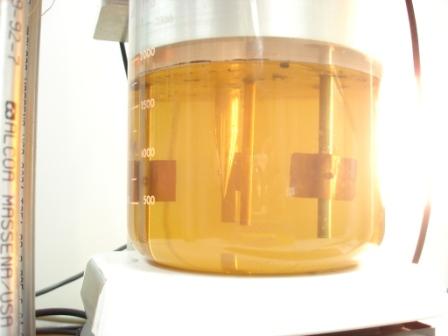
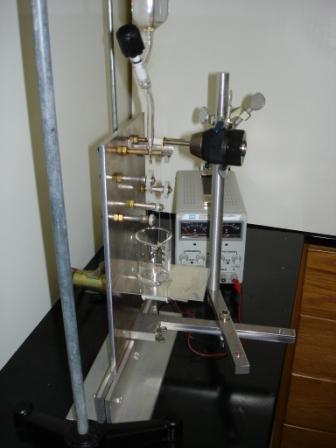
I have also worked in designing and developing a crystal grower by Bridgeman method. In this method, a Pyrex glass tube filled with a suitable amount of organic compound is slowly lowered ( 4 cm/12 hrs) into a beaker containing silicon oil and glycerine. The motion of tube is controlled by the computer, while temperature of glycerin and silicon oil is controlled by the temperature controller. The temperature is kept uniform by fitting propellers inside the beaker. The silicon oil is kept at the temperature slightly above the melting point of the compound, and glycerin is kept at temperature slightly below the melting point. When the tube with compound is fully immersed in silicon oil, it's totally melted. When it slowly touches the silicon-glycerin interface, crystal nucleation starts. By the time the tube is fully in glycerine, a nice crystal is formed.
.