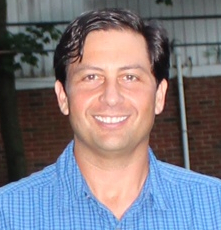
David M. Fresco, Ph.D.
Presently, we are embarking on several projects:
- Development and further validation of Emotion Regulation Therapy, a theoretically-derived, evidence based, treatment integrating principles from traditional and contemporary CBT with basic and translational findings from affect science to offer a blueprint for improving intervention ERT focuses on the motivational responses and corresponding regulatory characteristics of individuals with distress disorders and trains these individuals mindful attention and metecognitive regulation skills. Douglas Mennin [Hunter College]. This project was initially funded by NIMH.
- Elucidating of the neural correlates of treatment change following treatment of emotion regulation therapy (with Douglas Mennin & Amit Etkin [Stanford]). This project is being funded by grant awards made to Dr. Mennin (CUNY-Hunter) and to Dr. Fresco (KSU).
- Comparison of mindfulness-based stress reduction (MBSR) versus a credible comparator on unmedicated hypertension (with Joel
W. Hughes-PI). This project was initially funded by NCCAM and we are presently conducting NHLBI-funded R01 to conduct a large scale, 5-year trial (Fresco-PI, Hughes & Greeson, Co-PIs).
- Elucidating the neural correlates of loving kindness meditation (with Jessica Flynn, Wil Cunningham, & Sharon Salzberg). This project has been funded via a Varela Award to Jessica Flynn by the Mind and Life Institute.
- Developing and refining an objective measure of decentering (with Kathrine Shepherd).
- Elucidating the neural correlates of decentering and implicit emotion regulation in adept Tibetan meditation practitioners and demographically matched meditation naive individuals (with Kathrine Shepherd & Tony Jack). This project has been funded via a Varela Award to Kathrine Shepherd by the Mind and Life Institute
- Examining the neural correlates of affect labeling (with Tony Jack & Rebecca Rabinovich [CWRU] & Kathrine Shepherd)
- Elucidating the neural correlates of decentering, conflict monitoring, and interoceptive awareness in anxious depression (with Kathrine Shepherd, Tony Jack, Joseph Calabrese, Shirley Moore [CWRU])
- Developing and evaluating the concurrent and predictive validity of objective measures of interoceptive awareness (with Ryan Lackner & Josh Pollock)